
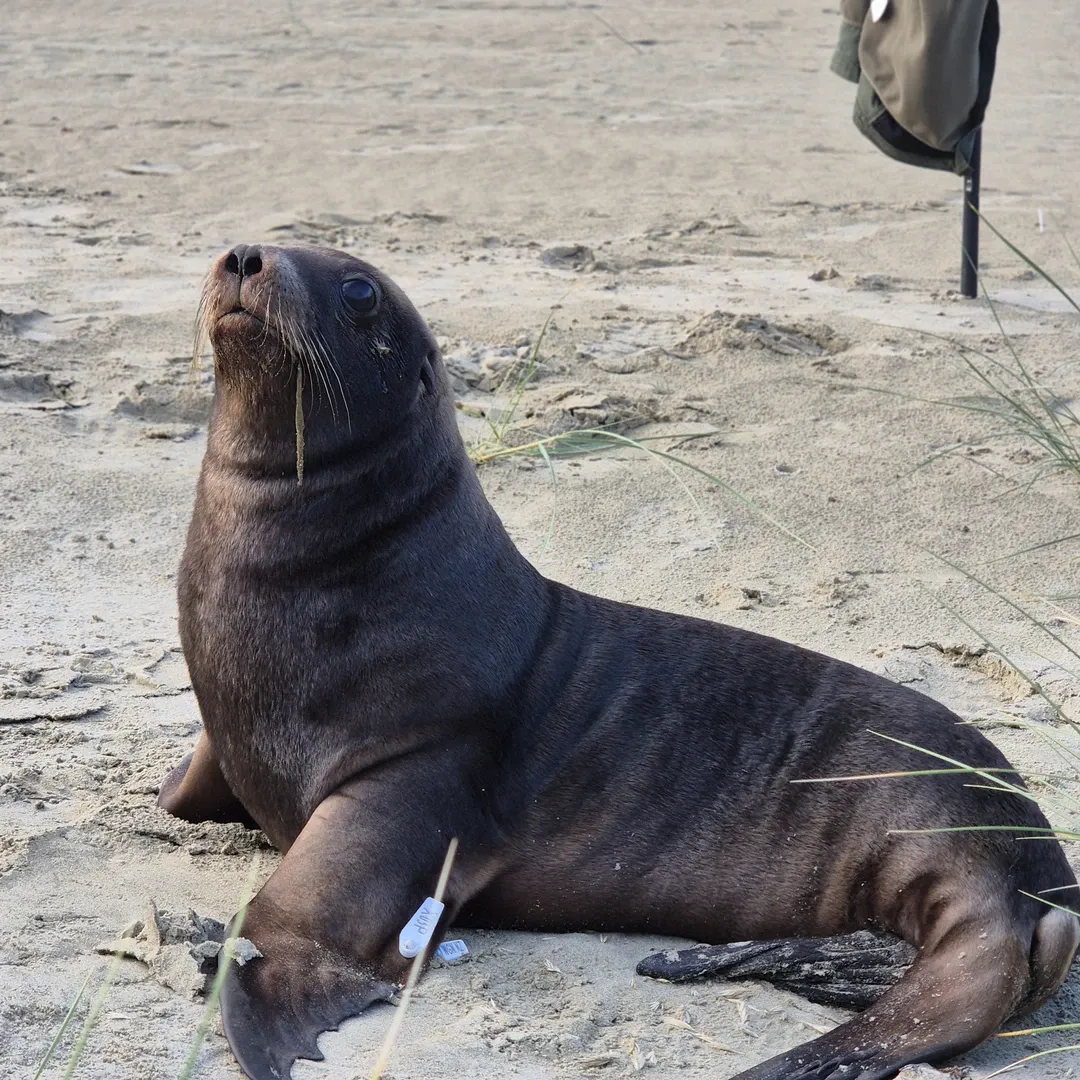
A young New Zealand sea lion pup has been killed after being struck by a vehicle on a Catlins coastal road, prompting the Department of Conservation to urge drivers to watch for marine mammals.
The five-month-old male sea lion was found dead on Hinahina Road near the Catlins Boating Club on 7 May with injuries consistent with being hit by a car.
DOC Southland Operations Manager John McCarroll says the death serves as a sad reminder for drivers to remain vigilant, particularly at night.
"Otago and Southland are becoming a hot spot for pakake, with numbers growing each year. This means we should expect to see more pakake in coastal areas - and when roads intersect with their natural habitat, we need to always be on the lookout," John says.
"There were only nine pups born in the Catlins area this season, so losing one will still have an impact on the population here overall."
The incident highlights the growing presence of New Zealand sea lions along the southern coastline. The species is one of the world's rarest sea lions and is found only in New Zealand waters. Most live in the subantarctic at Campbell and Auckland islands, but emerging colonies are establishing on the mainland.
Earlier this year, a population near Dunedin became the first mainland colony to birth more than 35 pups in a season - the minimum needed to reach breeding colony status.
McCarroll says the return of sea lions to coastal areas represents a conservation success story, especially as main populations in the subantarctic continue declining.
"Our coastal communities can be excellent advocates for the species, and everyone has a role to play in keeping both the wildlife and themselves safe," he says.
"Keep speeds down, always be on the lookout and be prepared to stop – you never know what's around the corner."
New Zealand sea lions have a conservation status of Nationally Endangered.
Drivers who encounter an injured sea lion are urged to contact DOC on 0800 DOC HOT. Anyone with information about the recent incident is encouraged to contact the department.
The same pup had been photographed during tagging earlier this year as part of DOC's monitoring programme.