
New Zealand added 4333 jobs in April, but economists warn the gains probably won't last.
Stats NZ data showed filled job numbers rose 0.2 percent between March and April — the second consecutive month of growth. Compared to a year earlier, job numbers were up 0.5 percent, the fastest annual increase in two years.
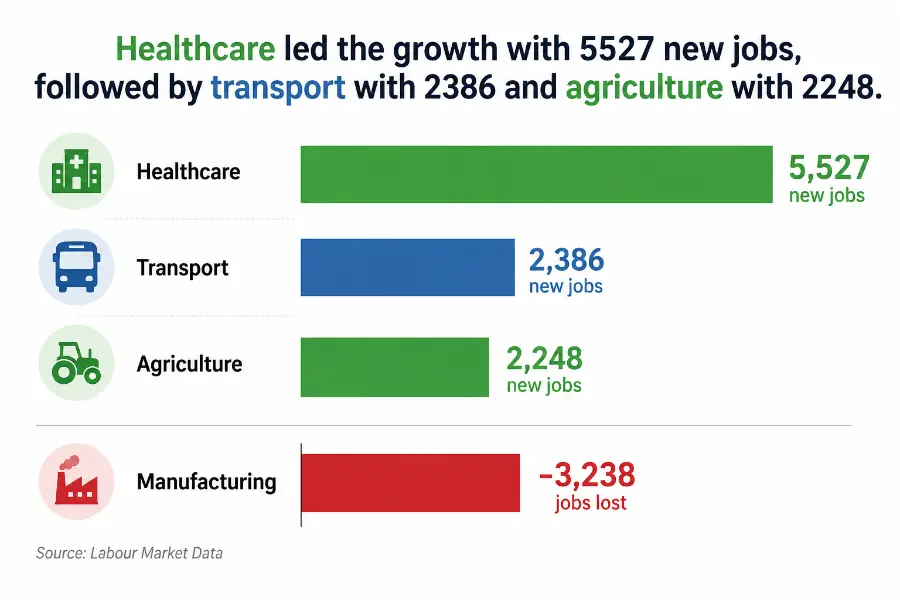
Healthcare led the growth with 5527 new jobs, followed by transport with 2386 and agriculture with 2248. Manufacturing shed 3238 jobs.
The South Island captured most of the gains, while young workers continued struggling. Jobs filled by people aged 30 or under fell 1.5 percent compared to April last year — the 33rd consecutive monthly decline.
Infometrics principal consultant Rob Heyes said momentum was building before Middle East conflict erupted.
"The job gains we are seeing in March and April are probably based largely on hiring decisions made in January and February, perhaps even late last year," Heyes said.
"We don't like to forecast monthly figures because they do bobble around quite a lot, but I'll be very surprised if we continue to see job gains two or three months from now."
Workers are staying put more than usual. Principal economist Nick Brunsdon said job turnover hit its lowest recorded level, with 12.8 percent of workers changing jobs each quarter on average over the year to March 2025.
"Workers are generally more likely to stick with their job when the labour market is weak, and we see this in the worker turnover rates, with previous low points in 2009 — after the global financial crisis — and in early 2021 — from the initial hit of the Covid-19 pandemic," Brunsdon said.
The job market peaked in June 2023 when 15.5 percent of workers changed jobs quarterly.
"In a stronger labour market, there are more jobs being advertised and fewer applicants applying, so workers have a higher chance of being successful. The effort of applying and interviewing is worth the reward of a potential pay increase. MBIE's Job Ad index shows that the number of job adverts nationally fell 54 percent between 2023 and 2025, and Seek data shows that the number of applicants rose by 2.5 times. Clearly, if you need a job then you'll still apply for jobs, but if you've already got a job and it's going okay, you might think twice about all the hassle when the labour market is weak," Brunsdon said.
"Having said all that, the changes in worker turnover rate aren't that dramatic between a strong and weak labour market, which goes to show that the majority of people stick with the same job regardless, on a quarterly basis at least."
Young people remain the most mobile workers, with a turnover rate of about 25 percent even last year. Seek said intent to apply for new jobs had stayed steady at about 35 percent of survey respondents.