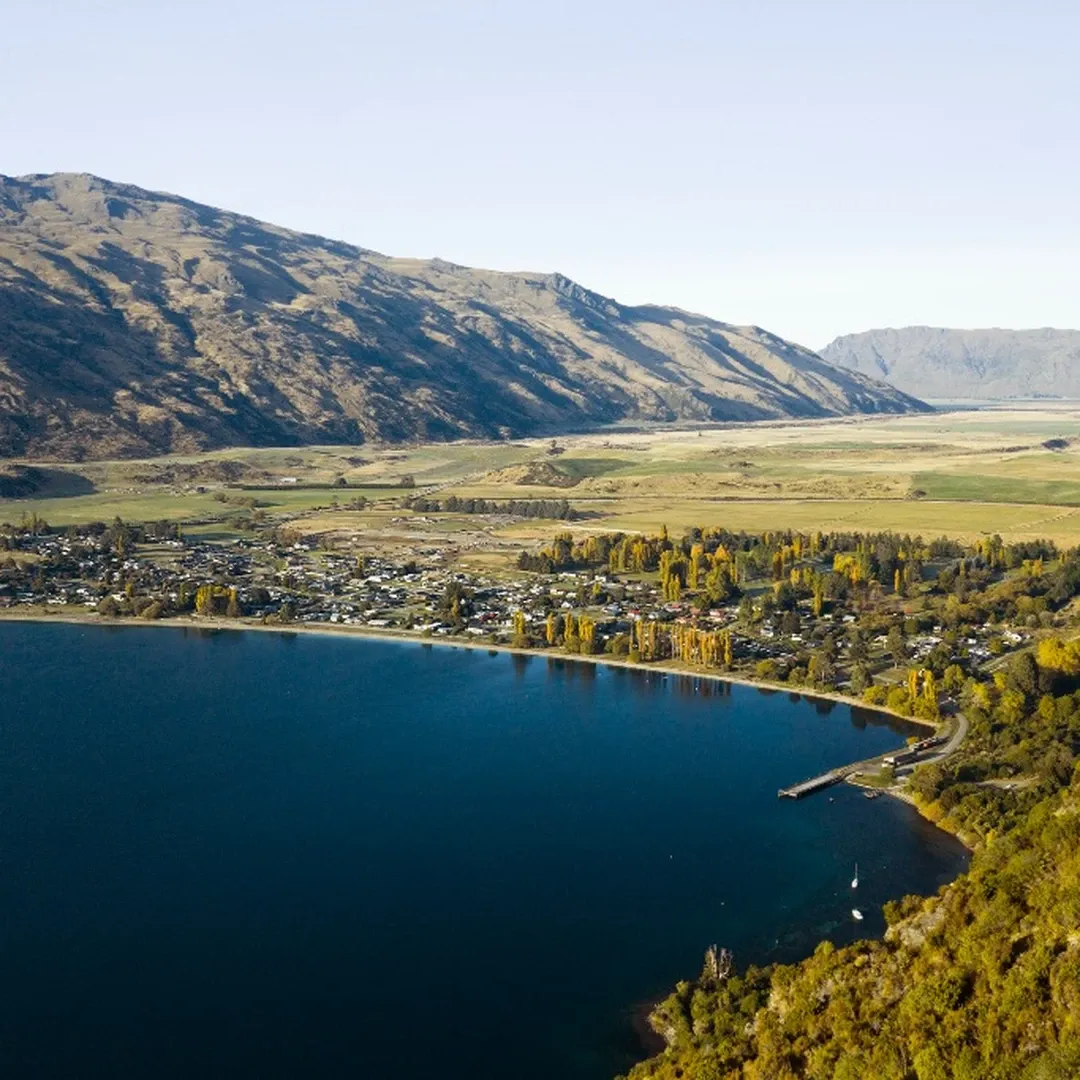
A plan to turn Kingston into a self-sufficient town of 10,000 people — with its own supermarket, healthcare, jobs and public transport — has been unveiled by the developer behind the lakeside township's expansion.
Kingston Village Limited (KVL) is in the early stages of assessing a long-term concept that would deliver around 2,500 additional homes, create roughly 5,000 local jobs, and contribute an estimated $1 billion to GDP. The build-out would span up to 20 years.
The scale is significant. Kingston's current zoned population and surrounding catchment sits at around 2,500 people. Reaching 10,000 — the threshold KVL says is needed to support meaningful local services — would require the township to quadruple.
To get there, Kingston Village would grow to around 1,500 homes in total. A further 1,000 homes are proposed at Glen Nevis Station, on privately owned freehold land adjoining the existing development. Those homes would be designed within the existing landform, with landscape-sensitive design intended to protect wetlands and ecological values.
The concept builds on a year of work by KVL on a masterplan for Kingston, including trialling an electric ferry as an alternative transport option and assessing what services could realistically be delivered locally. The conclusion: meaningful self-sufficiency requires growth at a scale the original plans hadn't contemplated.
KVL announced an initial 217 sections in December 2024. As those sections were released through 2025, they were quickly taken up by buyers.
Kingston Village general manager Nicola Tristram said the plans remain at an early stage.
"Early engagement is underway with the community, Ngāi Tahu, local government, agencies and stakeholders, and their feedback is vital to getting this right," Tristram said.
KVL intends to apply to the Minister for Infrastructure to establish whether the concept qualifies for fast-track acceptance.
"If the referral is accepted, 2027 will involve a full year of extensive community workshops, iwi engagement and ongoing collaboration with the Queenstown Lakes District Council, Ngāi Tahu, agencies and stakeholders as the proposal is developed in more detail," Tristram said.
The pitch is straightforward: a community that doesn't need Queenstown to function. "What we're working towards is a standalone, connected community that residents can be proud of, one that retains Kingston's character, rather than becoming a commuter suburb of Queenstown," Tristram said.
Share this article
The link has been copied!
Your link has expired. Please request a new one.
Your link has expired. Please request a new one.
Your link has expired. Please request a new one.
Great! You've successfully signed up.
Great! You've successfully signed up.
Welcome back! You've successfully signed in.
Success! You now have access to additional content.