
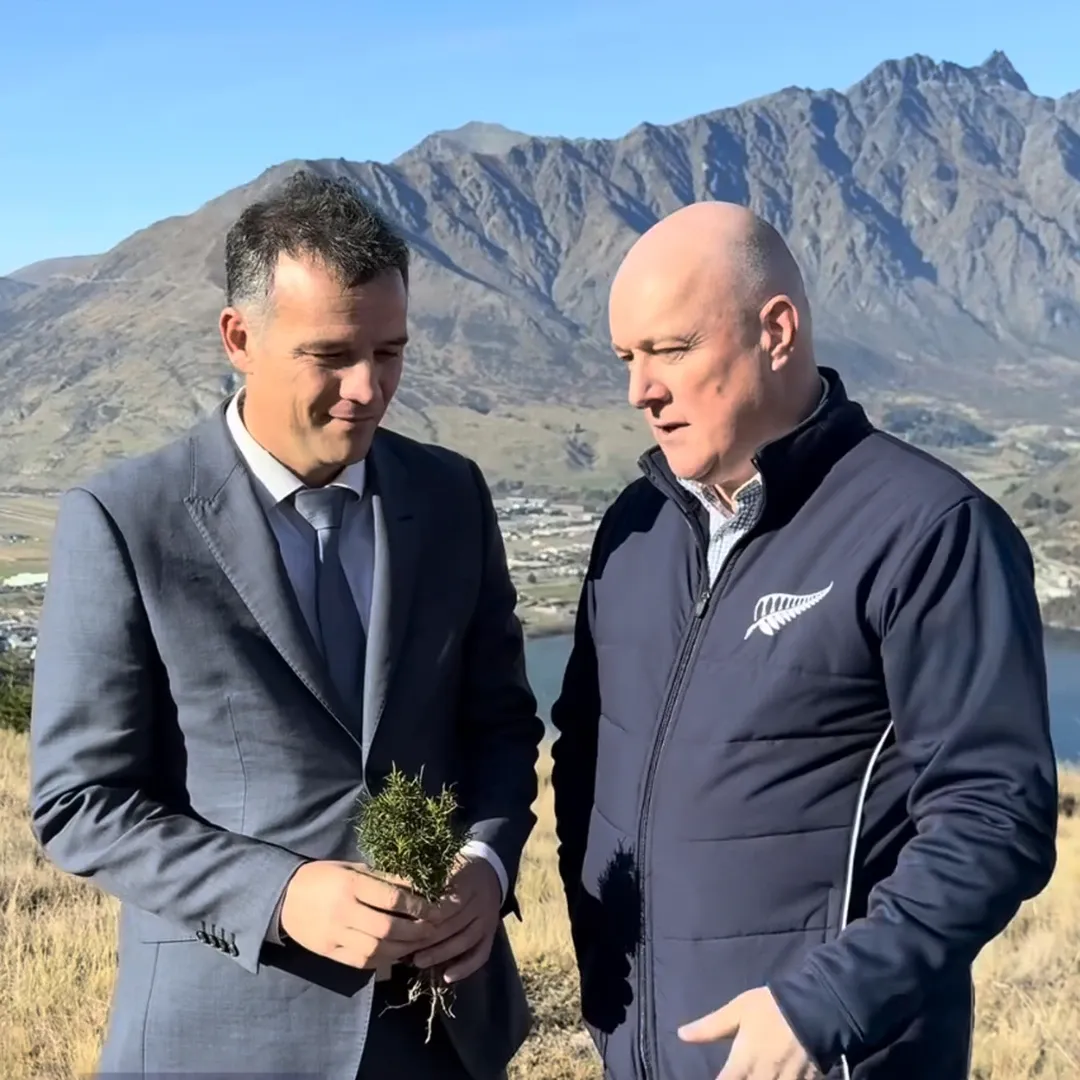

The Government will pump an extra $79 million into wilding pine control over three years, nearly doubling current funding to tackle what farmers call an ecological disaster spreading across New Zealand's high country.
The Budget 2026 commitment takes total wilding pine funding to $109 million — a significant increase that targets seed source areas in Marlborough and Wanaka alongside priority regions including Queenstown, Wakatipu, and the Mackenzie Basin.
"Wilding pines threaten productive farmland, water supplies in sensitive catchments, and native biodiversity - and they significantly increase the impact of wildfires," Biosecurity Minister Andrew Hoggard says.
Federated Farmers calls it a major breakthrough after years of lobbying for serious funding. The organisation's pest spokesperson Richard Dawkins says the investment addresses a problem most New Zealanders don't see but threatens farms, exports, and iconic landscapes.
"For the first time, we're seeing a serious effort to tackle some of the country's worst seed source areas, including Branch Leatham in Marlborough, which has long fuelled the wider South Marlborough infestation," Dawkins says.
That Marlborough site was originally seeded by the Crown for soil conservation. Previous funding has been "piecemeal and nowhere near enough."
More than two million hectares are now affected by wilding infestations, expanding by an estimated five percent annually. Unlike plantation forests, these invasive trees provide no productive value while intensifying wildfire risk and reducing groundwater.
Federated Farmers president Wayne Langford says landowners and councils must now match the Government's commitment: "If we can throw a big wave of control work at these pests, we've got a real chance to start turning the tide."
The programme receives $30 million from the International Visitor Levy, with Hoggard noting tourism depends on protecting unique natural environments.
Biosecurity New Zealand will develop a National Pest Management Plan to establish consistent rules preventing further spread. The organisation estimates $50 million annually is needed for the next decade to halt the invasion across productive farmland and conservation areas.