Presbyterian Support Southland (PSS) has highlighted the ongoing concerns to council about future provision of elderly housing in the city.
A workshop for councillors on the future of elderly housing on Tuesday (May 26), outlined the current issues and challenges.
PSS said 55% of Invercargill households are 1-2 person but the housing stock was still predominantly three bedrooms.
“Are we building the wrong type of housing for our ageing population?” PSS management asked.
Statistics NZ revealed that 27% of Invercargill’s population will be 65+ by 2054, but only a small minority of building consents issued in the city since 2020 have been for retirement units and apartments.
“There is a mis-match between what’s being built and what older people need,” PSS told the workshop.
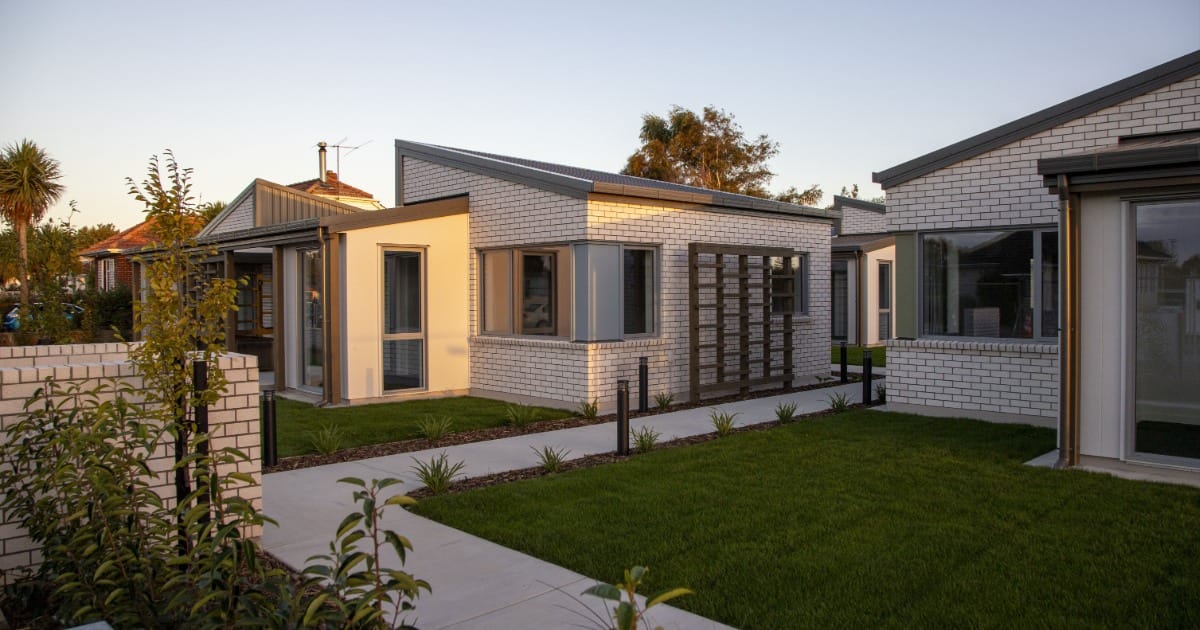
Breen Homes recently completed six one-bedroom homes as part of the Miller Street Housing Innovation Development, and council’s broader housing renewal programme.
Using SIPs panel construction to create warm and energy efficient passiv-standard homes, the $2.8 million project added to the more than 200 elderly persons housing units owned by council across Invercargill and Bluff.
There are currently 50 people on the waitlist for elderly housing in the city, and the new development replaced the four old units built in the 1950s.
PSS told council that the current average $470/week rent for a person on a fixed NZ superannuation was no longer affordable.
The organisation is assessing land available for community/pensioner housing, constructing and scoping additional retirement units, and has a feasibility assessment underway to repurpose the Peacehaven cottages that are end-of-life.
Council outlined in its presentation the next stage of the elderly housing renewal programme, to replace a further eight units and increase the service by four. The preferred site is on Janet St (Aurora Village).
Current issues identified that council as a landlord doesn’t provide for the wellbeing of vulnerable tenants (such as low income elderly or disabled).
The level of service is also declining and the expectations and standards for modern pensioner and social housing has risen significantly.
Share this article
The link has been copied!
Your link has expired. Please request a new one.
Your link has expired. Please request a new one.
Your link has expired. Please request a new one.
Great! You've successfully signed up.
Great! You've successfully signed up.
Welcome back! You've successfully signed in.
Success! You now have access to additional content.