
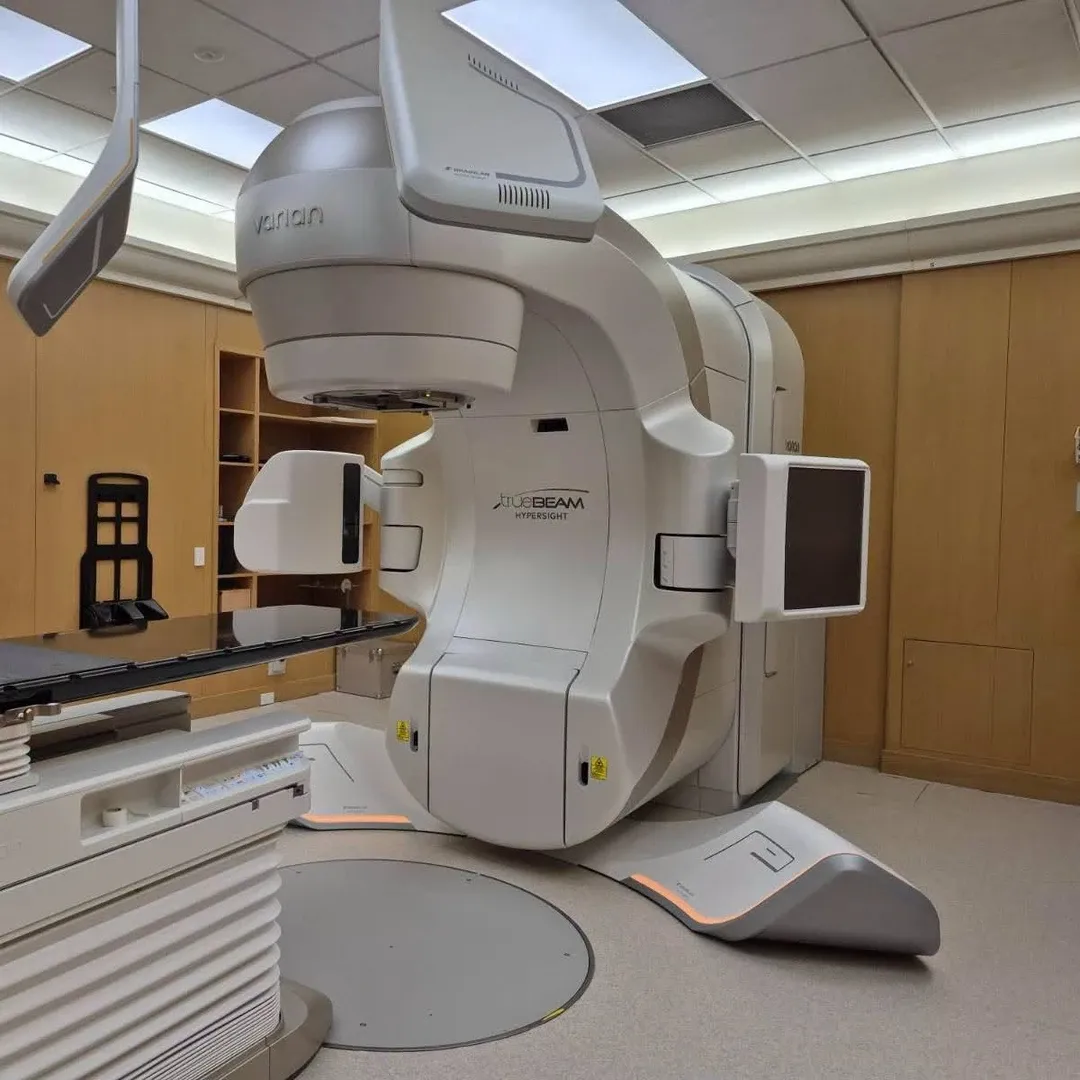
Cancer patients in the Southern region are now being treated on a new $4.3 million radiation therapy machine at Dunedin Hospital.
Health Minister Simeon Brown announced the linear accelerator — known as a LINAC — is fully operational after six weeks of testing and commissioning following its arrival on site in May.
"The new $4.3 million linear accelerator (LINAC) is now fully operational and treating patients," Brown said.
The machine replaces one that had reached the end of its working life. Its precision is the headline feature: it can target tumours to within one millimetre, delivering radiation from multiple angles to hit tumour sites with higher doses while limiting exposure to surrounding healthy tissue.
"It also enables the treatment of multiple tumours simultaneously in some cases, reducing treatment times and supporting treatment approaches that were not possible with older equipment," Brown said.
That last point matters. Older machines had real limitations. This one opens up options that simply weren't available before.
The upgrade didn't come without disruption. While one of the department's three LINACs was being replaced, staff worked extended hours to keep treatment timely. Brown acknowledged the effort directly.
"While one of the department's three LINACs was being replaced, the team worked extended hours to maintain timely access to treatment for their patients. Their commitment ensured continuity of care during a significant equipment upgrade."
The new LINAC also supports staff training and clinical development, giving the Radiation Oncology team at Dunedin Hospital access to the latest technology for workforce development purposes.
"The new machine delivers highly precise radiation treatment, capable of targeting tumours to within one millimetre," Brown said. "By delivering radiation from multiple angles, it allows clinicians to provide higher doses directly to tumour sites while minimising exposure to surrounding healthy tissue and reducing the risk of side effects for patients."
Brown framed the investment as part of a broader government commitment to cancer outcomes across the country, regardless of where patients live.
"We are focused on fixing the basics and building the future. For Southern patients needing radiation therapy, this means investing in world-class radiation treatment closer to home."