
Technology

The Data Grid project in Southland, New Zealand, represents a major new digital infrastructure aimed at establishing a world-class, highly efficient data center alongside a critical international subsea cable connection. Led by Remy and his team from Data Grid, the initiative seeks to capitalize on Southland’s favorable climate and strategic location to build a sustainable, high-performance data center powered by renewable energy. The project has navigated community concerns through transparency, ongoing engagement, and responsive design modifications to minimize environmental and social impacts.
Significant aspects include the reduction of diesel generators from 84 to less than 34, a 70% reduction in water consumption through primarily rainwater use, advanced battery storage to stabilize the grid, and infrastructure upgrades in partnership with Transpower. The site’s cooling solution leverages Southland’s naturally cold climate, enabling the data center to maintain industry-leading energy efficiency metrics (PUE below 1.1) while keeping water use low—unlike many existing global data centers in hotter climates.
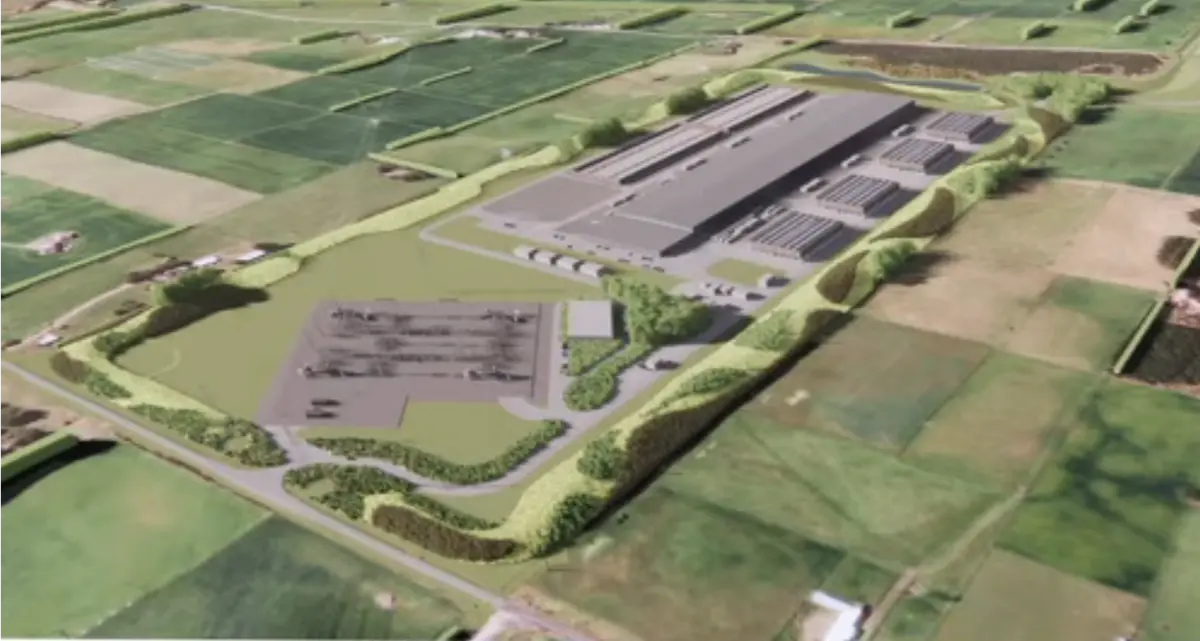
Community engagement has been a cornerstone, with a six-meter landscaped bund created to reduce noise and visual impact, alternative road access to avoid school zones, and continuous consultation with neighbors and Māori rūnaka. Collaboration with local organizations such as SIT (Southern Institute of Technology) ensures technical training and workforce development geared towards long-term, high-skilled employment in the region. The project is also a catalyst for local economic benefits during its peak construction phase, with approximately 1,200 workers expected, and significant opportunities for local suppliers.
The adjacent Tasman Ring subsea cable provides a strategic fiber optic connection bypassing congested and geopolitically risky routes through the South China Sea, enhancing national internet resilience and security. This dual focus on local sustainability, national infrastructure strength, and global connectivity positions Southland as a critical hub in the Asia-Pacific digital economy.
Highlights
- ⚡ Southland Data Grid designed to deliver a 360 MVA capacity, with no expansion plans beyond this scale.
- 💧 Water consumption reduced by 70%, relying mainly on rainwater and minimal purified water spray cooling.
- 🔋 Battery storage system stabilizes local grid frequency and manages rapid power demand changes.
- 🌿 A 6-meter high landscaped bund surrounds the site to mitigate noise and visual impact.
- 🏗️ Peak construction workforce of around 1,200, with local job training partnerships for long-term skilled employment.
- 🌐 The Tasman Ring subsea fiber cable enhances New Zealand’s internet resilience, bypassing vulnerable routes.
- 🤝 Continuous community engagement including close collaboration with neighbors and local Māori rūnaka.
Key Insights
- ⚙️ Iterative Design Reduces Environmental Impact: The project underwent a rigorous iterative design process post-resource consent, narrowing worst-case assumptions. This led to a substantially scaled-back infrastructure footprint, including a reduction of generators from 84 to fewer than 34 and reduced water use by over 70%. This reflects the importance of adaptable engineering responsive to stakeholder feedback and technological specifics.
- 🌡️ Cold Climate Enables World-Class Energy Efficiency: Southland’s cold climate is critically advantageous for data center cooling efficiency, enabling a targeted Power Usage Effectiveness (PUE) below 1.1 and minimal water usage. This contrasts with hot climate data centers that often trade water use for energy savings, making Southland a model for sustainable data center siting.
- 🔌 Battery Systems as Grid Stabilizers: The inclusion of large-scale battery storage serves dual roles. Firstly, it smooths rapid power consumption “ramps” from AI workloads—critical for grid stability—and secondly, it provides voltage and frequency regulation in Southland’s less stable electricity network. This direct grid support demonstrates an innovative integration of data center demand management with utility reliability.
- 🌏 Strategic Telecommunications Infrastructure Enhances National Security: The Tasman Ring subsea cable project provides New Zealand with a diversified, more secure international internet gateway that avoids the politically sensitive South China Sea. This infrastructure brings redundancy, reduces latency for Southland, and enhances the country’s cyber and communication resilience.
- 👷 Significant Local Economic and Employment Impact: Construction will boost the local economy with over 1,200 workers on site at peak periods, requiring coordinated accommodation and local supply chain involvement. Longer-term, the project commits to at least 250 skilled permanent jobs, including highly paid technicians and tradespeople essential for ongoing data center operations — roles that demand continuous maintenance, repair, and upgrades.
- 🏘️ Robust Community Engagement and Social License Efforts: The data grid team has prioritized extensive local engagement, including with neighbors, local authorities, and rūnaka, resulting in tangible concessions such as a landscaped noise bund, alternate road access to protect local schools, and cultural integration initiatives. Transparency is emphasized, with commitments to publish environmental and operational data publicly.
- 💰 Clear Financial and Tax Commitments: Data Grid is a New Zealand-incorporated company, paying local taxes on revenue generated by the project. With initial expected taxes of NZD 50millioninthefirstyearescalatingto50millioninthefirstyearescalatingto80 million annually over 15 years, the project supports national fiscal sustainability directly tied to local economic development.
Additional Noteworthy Points
- The total investment includes around USD 5 billion in facilities byDataGrid and an estimated USD 5 billion in facilities by DataGrid and an estimated USD 9 billion in tenant hardware over the facility’s lifespan, reflecting the immense scale of digital infrastructure capital expenditure.
- Water used for cooling is purified to extremely high standards (ultrapure water) required for sealed liquid cooling systems and evaporated during peak temperatures only, typically when ambient temperatures briefly exceed Southland’s historical highs.
- The project envisions innovative reuse of waste heat, such as potential collaboration with local agricultural businesses for greenhouses, though no firm plans are yet committed.
- Monthly public meetings at the local Mareawa Country Club will be held to maintain open lines of communication throughout construction and operation.
- The project underscores a broader shift in Southland’s economy towards “weightless” digital exports, diversifying from traditional physical commodity exports reliant on freight corridors.