
Education
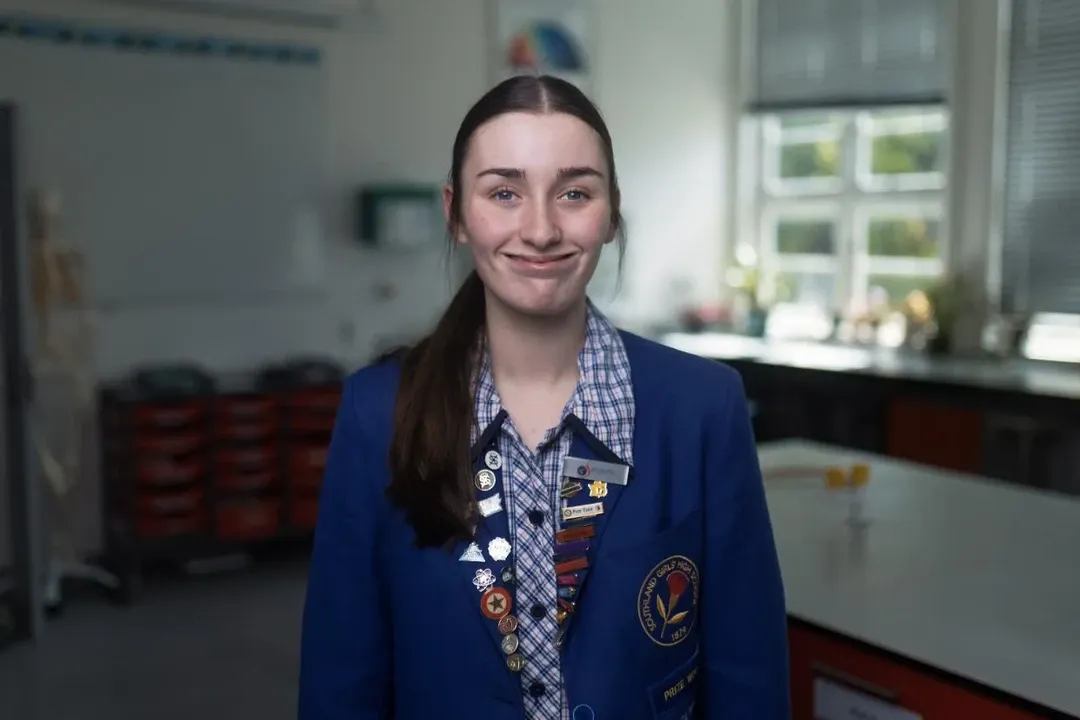
Sophie Ineson won a $50,000 for tertiary study and a trip to an international science fair in the United States — and she did it by never stopping asking questions.
The Year 13 Southland Girls' High School student has spent her after-school hours designing medical products for space, simulating microplastics inside a penguin's gut, and — most recently — figuring out why guilt doesn't make people care more about wildlife.
"I just like doing things that haven't been done before, looking at something that's new and can actually make a big impact on the world," Ineson said.
Her latest project investigated the psychology of conservation messaging. The idea came from a visit to her grandparents' place near the beach in Dunedin, where a pregnant sea lion gave birth outside their door. From that, she surveyed 60 senior high school students on how they responded to different conservation messages. The finding: guilt doesn't work. Empowerment does. Messages framed around smaller positive actions beat shame-based appeals. The Department of Conservation has taken notice and is in contact with Ineson about applying her findings.
Before that, she designed a wound product for space. Minor skin injuries heal differently in microgravity, and — as she put it — it's less than ideal to have "stinky old bandages lying around". Her solution, called Hydro Heal, uses hemp seed oil and natural materials to create a biodegradable gel that replaces plasters. She tested it on apple skin, measuring browning to check whether the gel sealed cuts. It earned her the Prime Minister's Space Prize for Student Endeavour and the $50,000 prize.
Earlier still, a trip on the Spirit of Adventure ship — plastic floating past in the water — sparked a lab-based investigation into what microplastics actually do inside a seabird. Working with her school's science department, she built a simulated penguin digestive tract from test tubes, water baths and incubators.
"I was looking at how the plastic is actually absorbing the enzymes which are in their food, giving them less energy to survive," she said.
She then researched hydrophobic coatings — the kind used on ship hulls — as a potential fix to stop enzymes binding to plastics. That project earned her an endorsement to represent New Zealand at the International Science and Engineering Fair in Phoenix, Arizona, in May.
Ineson has applied to study biomedical science at the University of Otago. At this rate, the university should be grateful she applied.