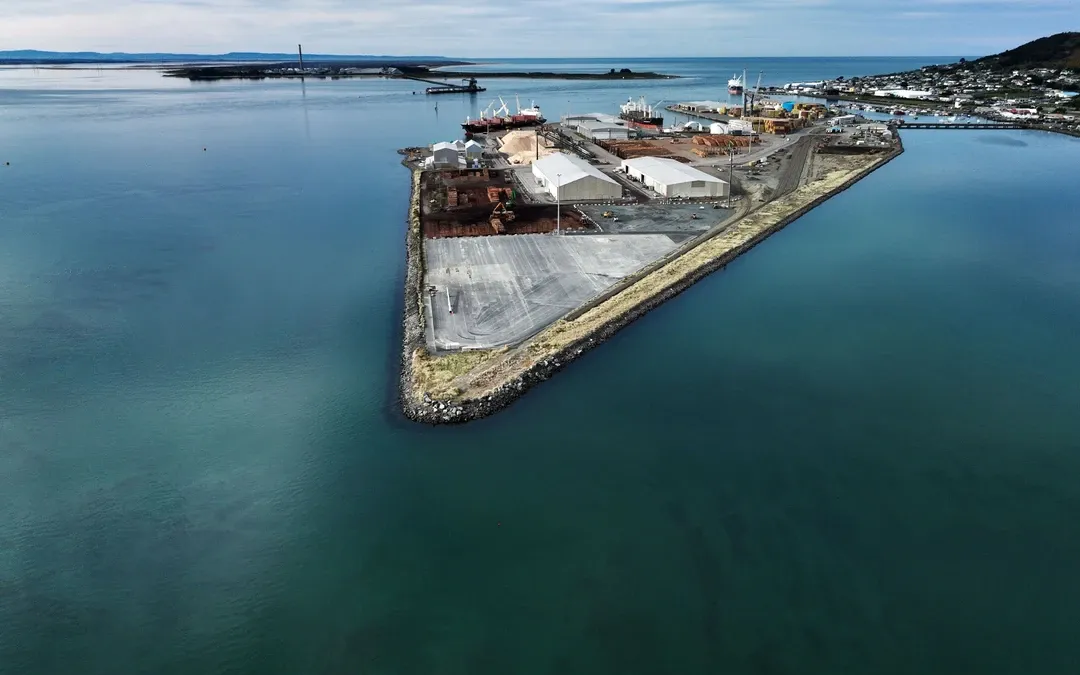
Environment Southland went behind closed doors on Thursday to discuss selling down its stake in South Port — and walked out without making a decision.
The regional council, which owns 66 percent of the Bluff port, held a public excluded session at its investment committee meeting where two papers were discussed in private: South Port Share Sell Down Update and South Port Resolutions. The timing was notable. Sitting right alongside those closed-door papers was a public update on South Port's record-breaking financial year.
The council has been eyeing a partial sell-down since at least 2024, when it consulted the community on dropping its ownership to 51 percent. In July, chief executive Stephen Hall announced that investment and advisory group Jarden had been brought in to help, saying the move would "diversify income and reduce investment risk".
Thursday's session produced no decision. The council confirmed it would continue exploring options, but council chair Jeremy McPhail was careful to frame what that actually means in practice.
"Any future decision would be based on a range of factors, including market conditions and whether a proposal could deliver an appropriate financial outcome for ratepayers," McPhail said.
"If the council is not satisfied that the benefits outweigh the costs or risks, it will retain its current shareholding."
That's not a commitment to sell — it's a door left open. Whether it gets pushed through will depend on what Jarden comes back with and whether the numbers stack up for ratepayers.
South Port, contacted by Local Democracy Reporting this week, declined to comment on the potential sell-down.
The port does have plenty to be pleased about otherwise. The public paper received at Thursday's meeting drew on results South Port released last month: a record $16.1 million after-tax profit and cargo volumes hitting almost 4 million tonnes. Growth was spread across agricultural activity, better throughput from the Tiwai Point aluminium smelter, and cargo tied to a wind farm project.
South Port chair Philip Cory-Wright put it plainly in an August statement: "This result reflects the strength of the Southland economy, the efficiency of our diversified trade base, and the commitment, skill and care of our people."
Looking ahead, the port expects trade volumes to hold roughly steady — though it flagged the possible loss of wind farm cargo as a risk worth watching.
There are leadership changes to navigate too. Chief executive Nigel Gear departed in May after more than 30 years with the company, more than eight of them in the top job. Cory-Wright himself is set to retire in October after 16 years as a director. A record profit year, and both the chair and CEO out the door — not the quietest moment for a sell-down conversation to be getting serious.
Share this article
The link has been copied!
Your link has expired. Please request a new one.
Your link has expired. Please request a new one.
Your link has expired. Please request a new one.
Great! You've successfully signed up.
Great! You've successfully signed up.
Welcome back! You've successfully signed in.
Success! You now have access to additional content.