
I'm Katie, and I'm MAD, M-A-D.
I mean, I have self-diagnosed Mother's Attention Deficit. More specifically, a unique and rare branch called CAD — Cooking Attention Deficit.
Because of my condition, I've been almost entirely banned from the kitchen. The task causes procrastination and extraordinary chaos. Not multitasking — more like starting everything except the one important thing: an edible meal for seven.
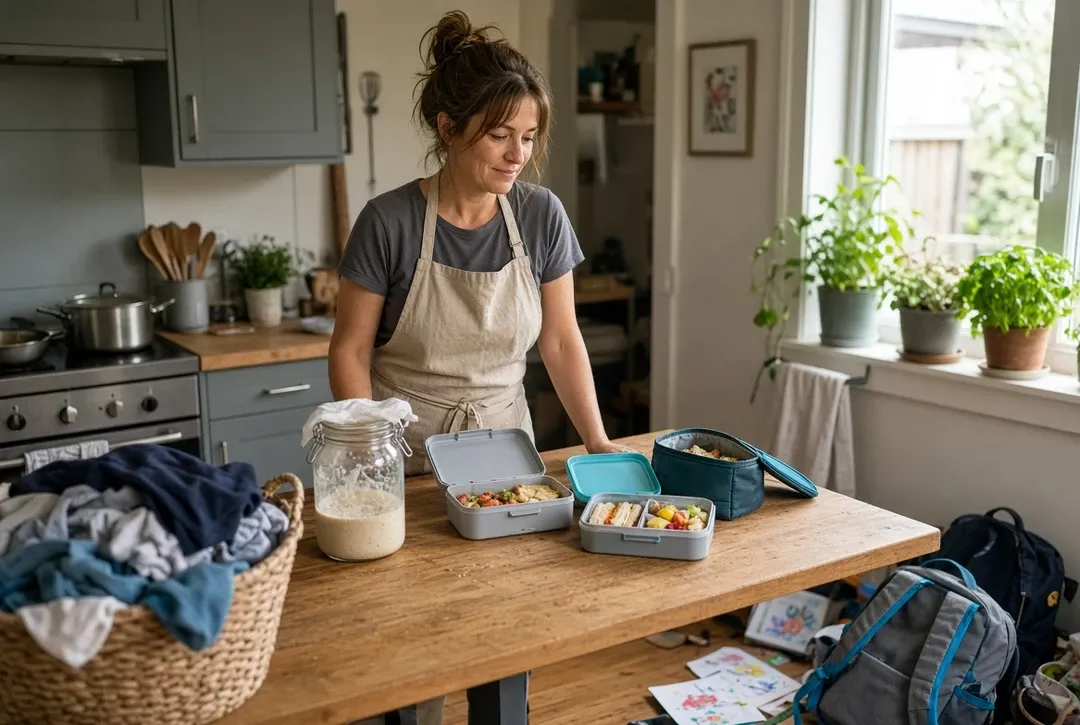
Tomorrow night's dinner is underway. Plants watered. Laundry going. Sourdough fed. Lunch boxes started. Tonight's dinner? Not so much.
And this is where my self-diagnosis gets interesting.
Because increasingly, more children are being diagnosed and labelled, while hordes of adults are self-diagnosing, seeking diagnosis, or diagnosing their partners to explain behaviours, traits and relationship challenges.
There are very different ways we can respond to a diagnosis. It can become a springboard for self-understanding, support and unlocking potential. Or it can become somewhere to hide — a reason we can't, a way of handing responsibility over to someone else. Worse, it can become a person's identity.
That last one concerns me most.
It's heartbreaking when I hear young children introducing themselves through their diagnosis: "I'm Riley. I'm autistic." "I'm Alex. I have anxiety." "I'm Jordan. I'm ADHD."
I'm not suggesting children shouldn't talk openly about their diagnoses. Diagnosis can bring enormous relief, understanding and access to support. But language is powerful. What we repeatedly hear and say about ourselves becomes part of the story we develop about who we are.
I recently heard a parent describe their child's medication as their "kind pill" — because it was going to help their child become kinder. Unintentional, yes. But imagine hearing over and over that the medicine you take is going to make you kind. What happens when a struggling child begins to believe they are actually unkind? Mean? Naughty? No child behaves this way on purpose.
Many adults are still carrying versions of these childhood stories — labelled because of academic struggles, coordination difficulties, emotional dysregulation or simply because they didn't fit comfortably into the environment around them. The words we repeatedly use don't just communicate information. They construct identity.
We're currently in a trend that encourages us to "embrace difference because it's your superpower". I love the intention. But a difference doesn't automatically become a superpower simply because we've labelled it positively. Understanding yourself is the beginning. Knowing what to do with that understanding is where the power lies.
I recently sat next to a woman on a ski lift reeling off her list: ADHD, anxiety, CPTSD. I could almost recognise the relief in her voice. That's an important phase. But what happens next? If we stop at the diagnosis, it's easy to get stuck — or hand responsibility over to teachers, medication or the health system to fix it.
To really unlock a child's potential — or help a struggling adult keep a job, manage finances and have healthy relationships — we need to become much more specific. A strength becomes useful when we understand it and learn how to work with it. A creative person who generates 50 ideas but finishes none doesn't yet have a superpower. They might need structure, prioritisation, accountability and strategy.
Introducing yourself through a label can unintentionally become shorthand for: "This is why I can't."
But what if we gave people something much more useful? When we lead with a label, we hand the other person a blank canvas onto which they paint their own perception — based on what they've heard and experienced. They might get it completely wrong.
So instead, what if we communicated the challenge, the need and the strategy?
Instead of "I'm autistic" — where the listener may assume quiet, inflexible, difficult — try: "I can get really focused on what I'm doing, so I need people to give me a bit of notice before changing plans."
Instead of "I have ADHD" — try: "I'm highly creative and generate ideas quickly, but I need help prioritising and finishing them."
Instead of "I have anxiety" — try: "When I feel uncertain or overloaded, my nervous system goes into high alert. I need time, predictability and strategies that help me regulate."
Now we're talking about something useful. Self-awareness, communication, support and solutions.
Imagine a child who knows themselves so well they can explain their strengths, challenges and needs to a teacher, an employer, a friend or a future partner. That child isn't defined by their diagnosis. They understand themselves. They know what they need. They know how to ask for it. That's the superpower.
And perhaps my kitchen is the perfect example. To produce an edible meal without burning it, I needed to understand myself. I know too many choices overwhelm me. I know repetitive tasks feel like a waste of time unless my brain has something interesting to engage with. I know I work better with a meal plan and something useful to listen to while I cook.
And as a bonus strategy, continuing to create chaos works remarkably well — because it annoys my husband so much he eventually takes over. The kitchen stays orderly. We get tasty meals. There are benefits to not claiming the superpower after all.
Because that's what working in a team is about. Knowing our strengths and weaknesses. Finding strategies that support us. Communicating those needs to the people around us.
That's how we empower our children to embrace their differences without becoming imprisoned by their labels — and help newly diagnosed adults move from "This explains me" to: "Now I understand myself. What am I going to do with that knowledge?"
It's time for tea. I might just go and hyperfocus on reorganising the pantry by pulling everything out first. Wish my husband luck.
Katie Oliver is co-founder of True in Nature Bush School and creator of the Secure Family Foundations Method.