
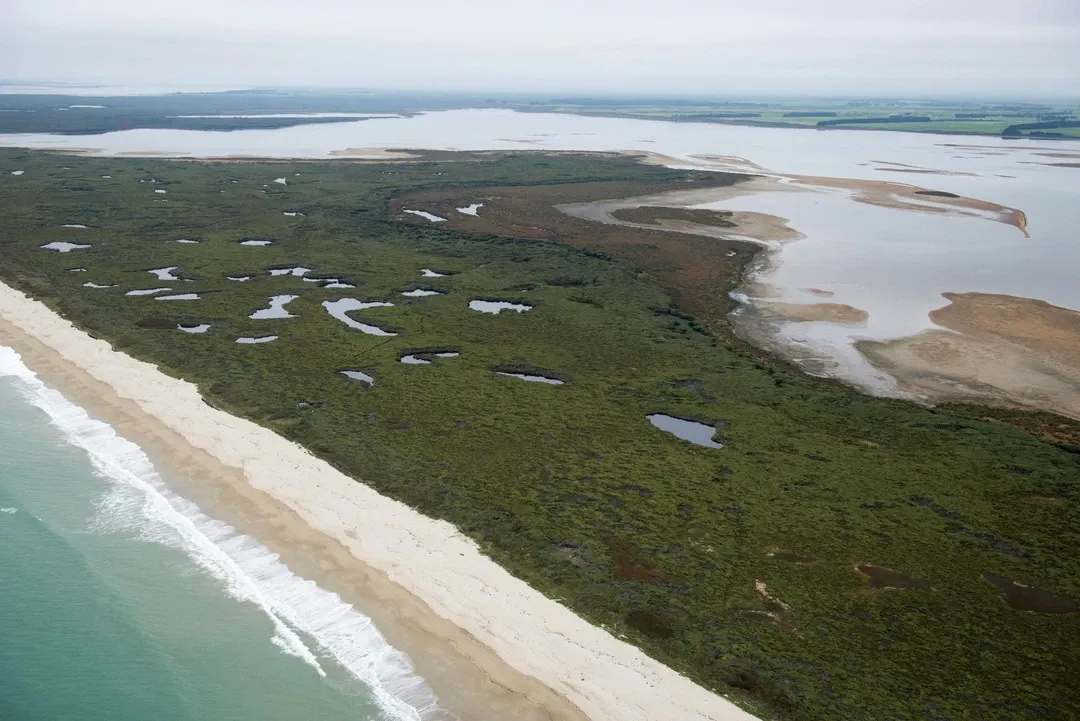
Environment Southland is using emergency powers to mechanically open Waituna Lagoon to the sea, after water levels stayed dangerously high for weeks.
The lagoon has sat above 2.3 metres for the past five days and above 2.2 metres since late July. That sustained high water is hitting nearby roads, paddocks, and farming operations hard.
Diggers will remove gravel from the bar until a channel forms and lagoon water can flow through to the sea. Closing it back up isn't a mechanical job — it needs the right combination of wind and sea conditions to push gravel back into place naturally.
Environment Southland general manager integrated catchment management Lucy Hicks said the prolonged high levels were raising ecological concerns heading into summer.
"We've been working to understand what these prolonged high-water levels as well as high levels of nutrients and sediment mean for the lagoon's ecological health, particularly as we head into the warmer months," Hicks said.
"Opening the lagoon now will help reduce the risk of ecological harm, while also easing some of the pressure being felt by the local community."
There are real trade-offs in opening now rather than waiting. Nutrient-rich water sitting in the lagoon through the warmer months risks fuelling algal growth — but opening in spring also affects Ruppia and other aquatic plants at a key growth period.
"There are trade-offs in opening the lagoon at this time of year," Hicks said. "We need to reduce the risk of nutrient-rich water sitting in the lagoon and fuelling algal growth, while also considering spring and summer growth for Ruppia and other aquatic plants."
The timing of the opening will be carefully coordinated around conditions that allow it to be done safely and effectively.
Waituna Lagoon sits within the Bluff-Waituna wetland complex and holds international significance as a wetland. It is home to native birds, plants, fish and insects, is culturally significant to Ngāi Tahu, and is a well-used trout fishery and walking destination.