
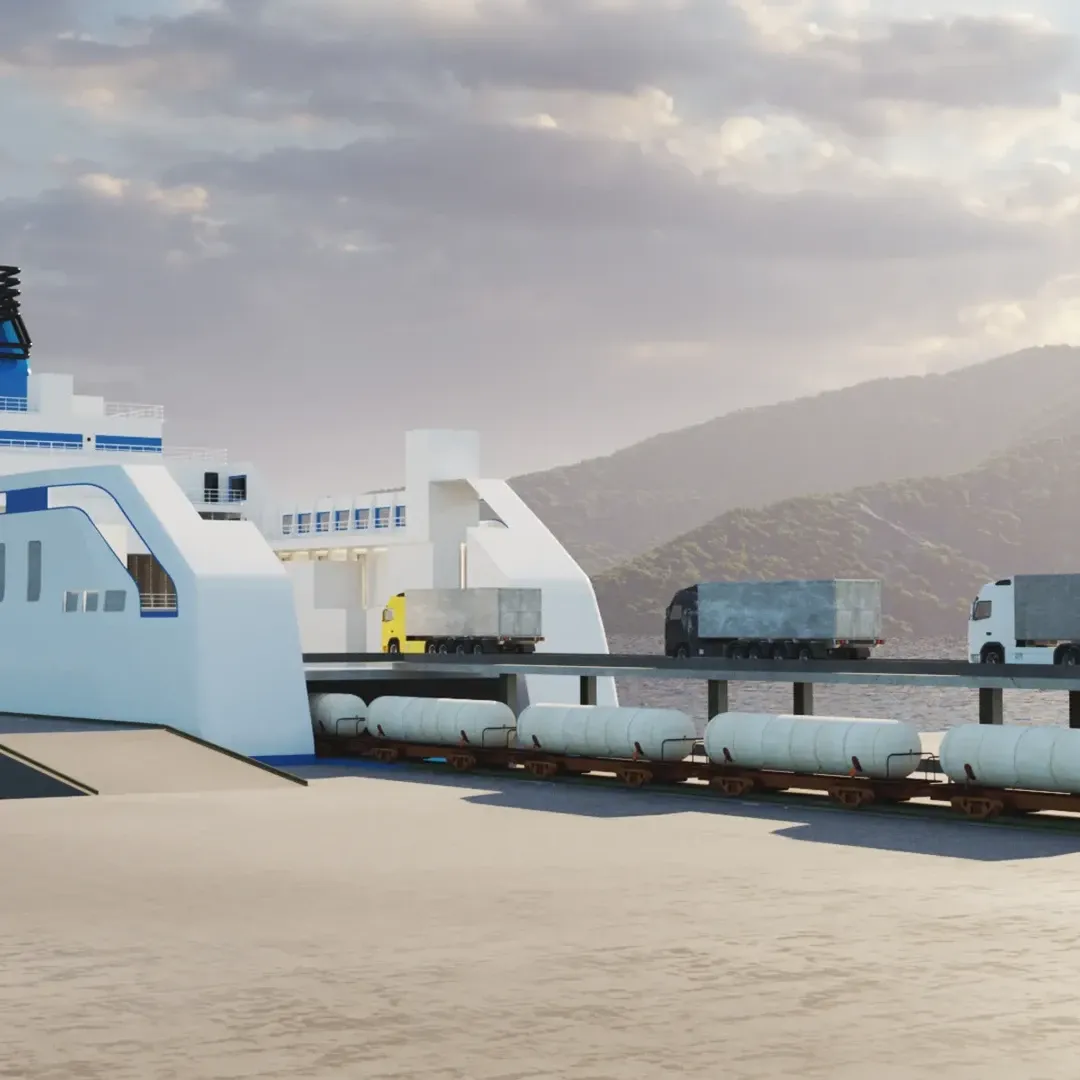
New Zealand's two replacement Cook Strait ferries will be named Kupe and Cook — and Minister for Rail Winston Peters is already bracing for the argument.
Peters announced the names at Parliament, alongside confirmation that KiwiRail will operate both vessels for 30 years from their arrival in 2029. The ships are being built by Chinese state-backed shipbuilder Guangzhou Shipyard International, with construction due to start in 2027.
"These are proper names. Historic names. New Zealand names. Kupe and Cook reflect New Zealand as it actually is: a country shaped by the sea, by settlement, by risk, by enterprise, and by people who crossed dangerous waters in search of a future," Peters said.
He went further, targeting what he called "snivelling wokesters" who view Captain Cook as "nothing more than a symbol to be condemned, cancelled, and cast out."
"A mature country does not run from its history. A serious country does not vandalise its memory to satisfy the latest fashion in whinger politics."
"We will not allow a noisy minority to dictate what the rest of this country is allowed to remember," he said.
On the choice of KiwiRail as operator, Peters pointed to 64 years of running the Interislander. "KiwiRail has run the Interislander since its inception in 1962, and in our book, experience counts." Interislander reliability currently sits at 98%, with KiwiRail on track — pending final audit — to meet its $160 million earnings target to June 30, 2026.
The deal is no handout. KiwiRail will pay commercial port fees to CentrePort, Port Marlborough and Ferry Holdings — similar to what is paid today as a share of fares. CentrePort and Port Marlborough will earn returns on their $100m and $110m contributions respectively. Ferry Holdings is paying $373m for the more complex infrastructure work in Picton, where a special purpose vehicle will co-own the new facilities. Wellington's marine infrastructure will also be modified, with HEB and Vinci working in Picton and Brian Perry Civil in Wellington.
The government has capped its contribution at no more than $1.7 billion, confirmed in November 2025 alongside the fixed-price shipbuilding contract. The overall programme cost is estimated at $1.86b — excluding the cost of exiting the previous iReX contracts.
That cancellation still looms large. The final bill for pulling the plug on the Labour-era iReX project came to $671m, including $222m paid to Hyundai Mipo Dockyard. Those ships would have been operational by now. Peters argues the maths still works, saying the current programme saved $2.3b compared to iReX, which KiwiRail had costed at $3.1b and Treasury had warned could reach $4b.
"There will be no cost-plus construction contracts and no lazy project management. Ferry Holdings holds the purse strings and retains the major rights in controlling the programme," Peters said.
The operating arrangement will be reviewed in 2039. KiwiRail will also be required to build a reserve over those 30 years to fund replacement ferries in 2059.
"This is not just a deal to secure the Strait for another generation; it secures it for the next two generations," Peters said.