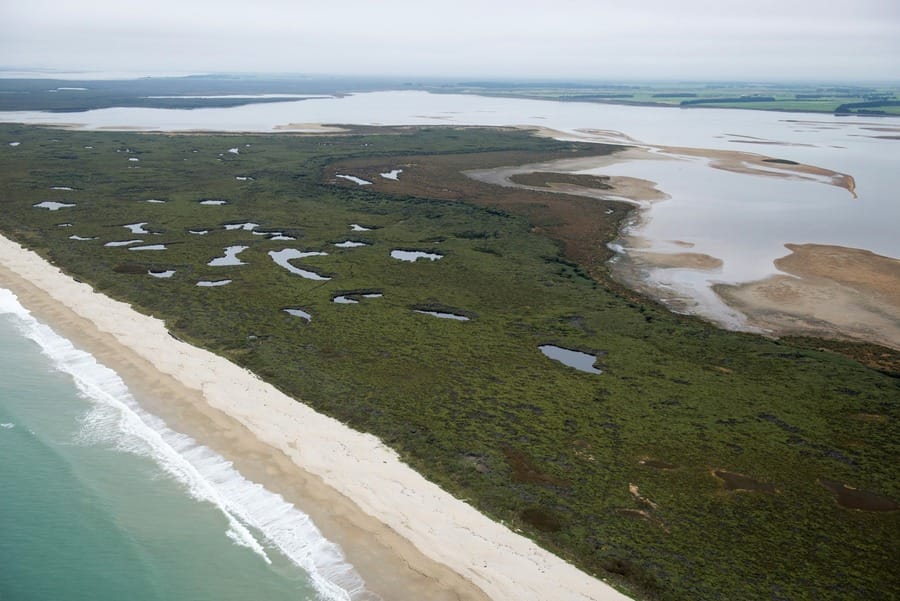
Recent survey results from Southland’s Waituna Lagoon have given the Department of Conservation (Doc) a reason to be hopeful, with signs the wetland may be recovering from years of environmental decline.
The annual monitoring showed a sharp drop in algae levels and an increase in aquatic plant Ruppia, which grew in 80% of sites surveyed—up from 36% the year before. Another aquatic plant, stonewort, was found at 54% of sites, a significant increase from just 7% in the previous survey.
Doc’s principal science adviser, Hugh Robertson, cautiously welcomed the news. “This is a system where we really have to keep an eye on the water quality as well as water levels ... for a number of years ahead,” he said. “The system is vulnerable each summer to whatever conditions are present.”
Located around 40 minutes from Invercargill, Waituna Lagoon is a nationally important wetland, home to many native bird, fish, and plant species. However, it has long struggled with high nutrient levels due to nearby farmland runoff, leading to toxic algal blooms.
The lagoon is also manually opened to the sea to manage water levels and quality. In October 2024, a 20-year consent was granted to Doc, Te Rūnanga o Awarua, and Environment Southland, setting conditions for when this could happen. Federated Farmers has appealed the consent, arguing that the lagoon’s minimum water level is too high and negatively impacts nearby farms.
Mr Robertson said managing the lagoon involved a careful balancing act. Leaving it open too long could increase salt levels and reduce water depth, harming plant life. On the other hand, opening the lagoon helps flush out excess nutrients.
“So, in an ideal world, if nutrient levels coming into this lagoon were much lower, [we] probably wouldn’t need to open it that often. Apart from when there’s concerns around flooding and other things like that,” he said.
The lagoon was last opened to the sea in September 2024 and closed again in April. At the time of the latest survey, the water level was 1.4 metres, which Mr Robertson said was ideal for plant growth and habitat support.
While many coastal lagoons across the country are in poor condition, Waituna appears to be holding its own, with Mr Robertson describing it as “fairly resilient.”
Share this article
The link has been copied!
Your link has expired. Please request a new one.
Your link has expired. Please request a new one.
Your link has expired. Please request a new one.
Great! You've successfully signed up.
Great! You've successfully signed up.
Welcome back! You've successfully signed in.
Success! You now have access to additional content.