
News
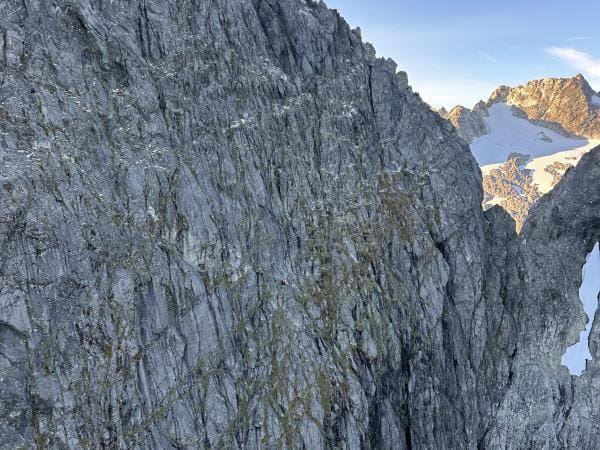

Two experienced climbers have been rescued after spending three nights stranded on a steep mountainside near Sabre Peak in Fiordland National Park.
The drama began on Wednesday afternoon when a Personal Locator Beacon was activated around 4.30pm in the Sabre Peak area. A Southern Lakes Helicopter was immediately dispatched, but heavy rain and low cloud prevented any rescue attempt.
The Rescue Coordination Centre New Zealand passed information to police, who launched a search and rescue operation. On Thursday morning, police received Emergency SOS satellite text messages via the brother of one climber, confirming both men were uninjured but unable to move due to severe weather conditions.
A second rescue attempt on Thursday also failed due to the harsh conditions, leaving the climbers stranded for another night.
Southland Search and Rescue Coordinator Dougall Henderson said police maintained contact with the climbers via satellite throughout the ordeal, keeping them updated on rescue efforts.
"About 7am today, the Southern Lakes Helicopter crew successfully located the climbers and carried out a 100 foot long line extraction from the mountainside," he said.
"Their survival is remarkable. They had been stranded on the steep mountainside for three nights, sheltering in a two-person bivvy and sleeping bags, which became saturated during prolonged exposure to severe weather."
The situation had become desperate by the time rescue arrived.
"They had run out of food, and believed they would not have survived another night on the mountain," Henderson said.
Both climbers were examined by a doctor aboard the helicopter before being transported to Te Anau for further medical assessment.
Henderson praised both the climbers' decision-making and the rescue crew's efforts under extreme conditions.
"The climbers made the right decision to activate their beacon early and remain in place once the weather deteriorated," he said. "They were well equipped and they communicated clearly using satellite messaging, and that allowed rescuers to make informed decisions while waiting for a safe weather window."
He also commended the helicopter crew's skill in the challenging alpine environment.
"This was also an outstanding effort by the helicopter crew, operating in an extreme and unforgiving alpine environment. Their ability to safely locate and extract the climbers using a long line technique prevented what could have been a far more serious outcome."
The incident serves as a stark reminder of Fiordland's unpredictable weather and the limitations facing rescue operations in mountainous terrain.
"Even when help is on the way, adverse weather can delay rescue efforts," Henderson warned. "People heading into alpine or remote areas need to plan conservatively, monitor forecasts closely, and carry appropriate emergency equipment – including a PLB or satellite communication device, or both."
Police encourage anyone venturing into remote areas to leave their intentions with a trusted person, check weather conditions in advance, and be prepared to abandon plans if conditions deteriorate.