
news
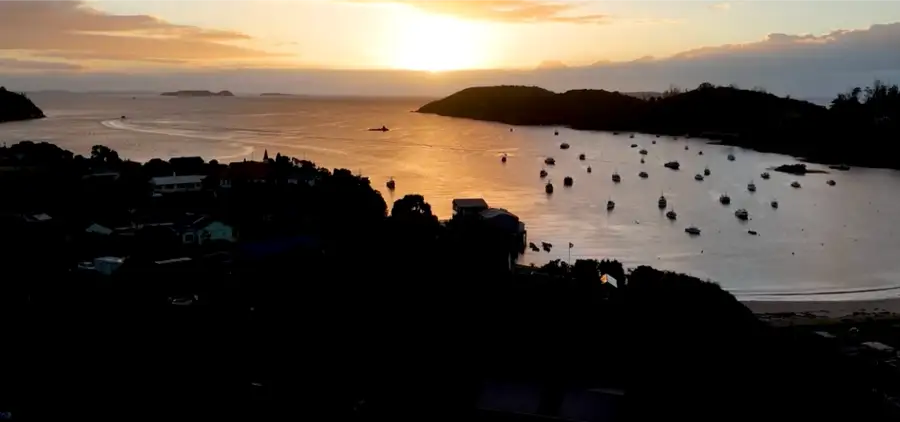

Stewart Island could have its long-awaited solar farm operational by Christmas, with construction potentially starting as early as June, officials say.
The island's 480 residents currently rely entirely on diesel for electricity and are facing steep price increases due to Middle East conflicts driving up fuel costs.
Southland Mayor Rob Scott said the council is exploring ways to fast-track the $15 million government-funded project by classifying it as emergency works under the Resource Management Act.
"This is certainly an exceptional circumstance ... so we're currently exploring Section 330 of the RMA, which would enable us to get started while going through the consenting process," Scott said.
The solar farm would cut diesel consumption for electricity by about 75 percent, he said.
"I guess the project's kind of proven its value now. One of the reasons why we've done it is not just to address the high power prices that residents on the island were already paying, but to take out some of this vulnerability, the susceptibility to high diesel prices which we're experiencing right now," Scott said.
Residents are already feeling the pinch. Long-time resident Sharon Ross said she's setting aside cash for winter's expected power price hikes.
"We are expecting this winter is going to be a lot harder than other winters have been for us," Ross said. In a normal year, her household spends between $500-$800 monthly on electricity.
Ross, who co-owns the island's only petrol station, said fuel prices have topped $4 per litre.
Southland District councillor Jon Spraggon said the council-owned power station has warned residents to conserve electricity.
"It's worth noting the price of diesel for the council for the power supply went up 45 percent in the last week, so that's going to have to be passed on somehow," Spraggon said.
Residents can expect "short steps" up in power bills, as "there's no way we can hold the power price down, and people are going to have to look at the amount of power that they actually use."
Local business owner Helen Cave, whose hotel and fish processing business each cost more than $10,000 monthly in power, has ordered solar panels as backup.
"I'd rather pay more than not have it, but I have ordered some solar panels," Cave said.
Resident Morgan Bellworthy Hamilton is also exploring solar options: "We've been talking about solar, and I think it probably is the best option for us, as a house, to get solar."
Snuggery Café co-owner Simon Moir, who uses solar to offset 30 percent of his power bill, remains cautiously optimistic about the island-wide project.
"I'm pretty excited for it, but I don't know how much it's actually going to fully cover and what sort of price reduction that will truly create ... we don't have a lot of sunshine here just because of where we're positioned in the world, and we get a lot of cloudy days," Moir said.
"But I'm really grateful that our Southland mayor has finally taken the true steps to get it across the line and get the money from the government to pursue this."
The solar project follows previous failed attempts at alternative energy, including a mooted hydro scheme and wind farm.
Ross said when she moved to the island 14 years ago, similar conversations were happening.
"When we moved here 14 years ago, we seemed to be in the exact same conversation. And they kept on doing studies, and they would revisit these studies, and nothing happened," she said.
Scott assured residents this time is different.
"I don't accept failure and I've given the island my word that this project's going to go ahead," he said.
While the solar farm won't bring prices down to mainland levels, it will help lower bills and make them more predictable.
"We do need to factor in the maintenance and the replacement of the solar farm. So the prices are still going to be relatively high, but they are going to be certain and stable," Scott said.