Property values across Invercargill and Bluff have risen by an average of almost 15 percent over the past three years, according to new rating valuations completed for the city.
Councils across the country revalue properties every three years. In 2026, independent valuation firm Quotable Value (QV) carried out the assessment on behalf of Invercargill City Council.
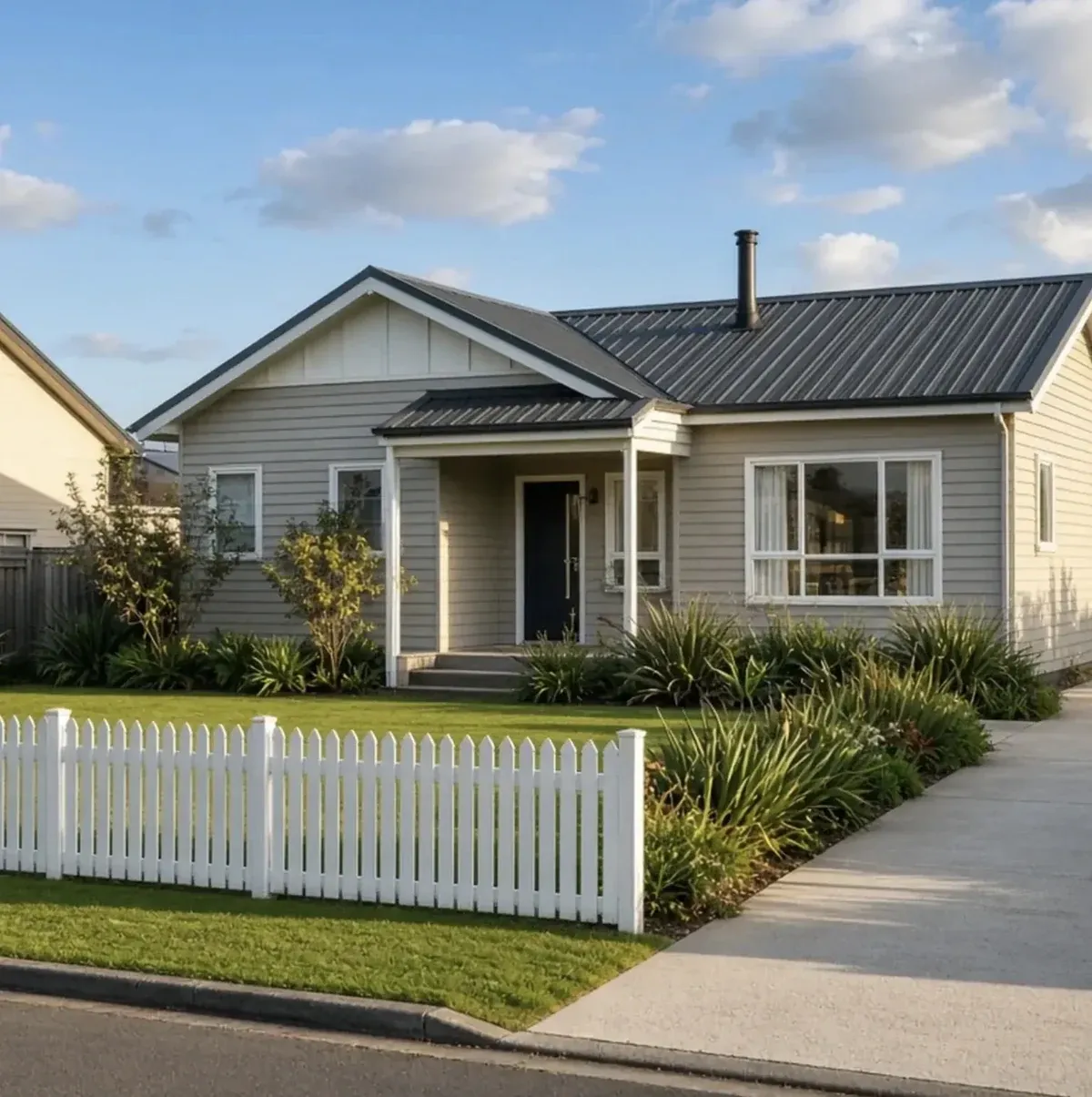
Residential housing values have risen by an average of 17.5 percent since the last revaluation in 2023. The average house value in Invercargill is now $565,000. The average land value has increased by 23.5 percent to $238,000.
Invercargill City Council group manager corporate services Patricia Christie said the figures reflected the city's changing economic landscape.
"The RV increases seen across the city reflect the ongoing evolution of Invercargill's property market, and the growth we are continuing to see across the city. They provide a real snapshot of the buoyancy and positive outlook for Invercargill's economy," Christie said.
The revaluation process allows the council to capture changes to the property market and ensure rates are distributed equitably throughout Invercargill and Bluff, Christie said. An increase in rating valuations (RVs) does not automatically translate into an increase in rates. Rather, RVs play a role in determining how the total rates take for core services is shared across the city.
"It's a bit like divvying up a pie: and RVs are a tool Council uses to ensure everybody is paying the share they should."
Updated RVs for all 26,736 properties in the city will be sent to property owners within the next week.
QV urban valuations manager Tim Gibson said the increase had been driven by a combination of steady buyer demand, limited housing stock, and rising construction and development costs. RVs reflect the likely price a property would have sold for on 1 July 2026, excluding chattels.
"Demand for entry-level properties has remained strong, while modernised homes and newer builds in desirable locations have attracted premium prices, reflecting buyers' willingness to pay more for quality, well-presented properties," Gibson said.
Demand for residential sections has remained stronger in northern parts of the city. While the council's Plan Change 2 had increased opportunities for residential intensification, rising development costs have tempered developer appetite for smaller-scale projects.
Steady market growth has continued in Bluff over the past three years, though dwelling condition remains a key factor, Gibson said.
Mortgage & Insurance Supply owner Mandy Jordan says: "These changes don't make a big difference, if any, to lending applications. Banks use their own internal valuation systems, although they may still require a paid registered valuation in some cases. The GV alone isn't relied on.
"The GV determines the rates repayment amount, but I wouldn't challenge it if you think the bank is going to rely on it."
The average capital value of an improved lifestyle property has increased by 6.3 percent to $797,000, while the corresponding land value for a lifestyle property has increased by 4.5 percent to $323,000.
"The Invercargill lifestyle market has continued to tick along well, with a more modest increase in values compared to residential property since the last revaluation. There is a general shortage of listings, with entry-level properties below $750,000 particularly well received. Demand also remains steady for well-presented modern properties around $1,000,000, while superior properties above $1,300,000 can take longer to sell due to a smaller pool of buyers," Gibson said.
Commercial property values have increased by 8.8 percent, while industrial properties have recorded a 16.6 percent rise since 2023. Commercial and industrial land values have also increased, by 10.8 percent and 19.8 percent respectively.
"Investor interest in Invercargill's industrial property sector has strengthened, supported by a buoyant rural economy, long-term certainty surrounding the Tiwai Point Aluminium Smelter, and major developments such as the data centre project," Gibson said.
"Together, these factors have boosted confidence in the local economy and increased demand for industrial properties."
Retail properties outside the Invercargill Central development have experienced a reset in market rental levels, resulting in declines in some inner-city property values. Demand for modern office accommodation has remained strong, while more dated or poorly-configured premises continue to face weaker demand.
The rural market has overall remained positive. Pastoral properties have increased by 9.9 percent, while dairy recorded the strongest movement with an average increase in capital values of 20 percent, Gibson said.
The total rateable value for Invercargill is now $18.67 billion, including $7.43 billion in land value.
Property owners who do not agree with their rating valuation have the right to object to their new RV by 22 January 2027.