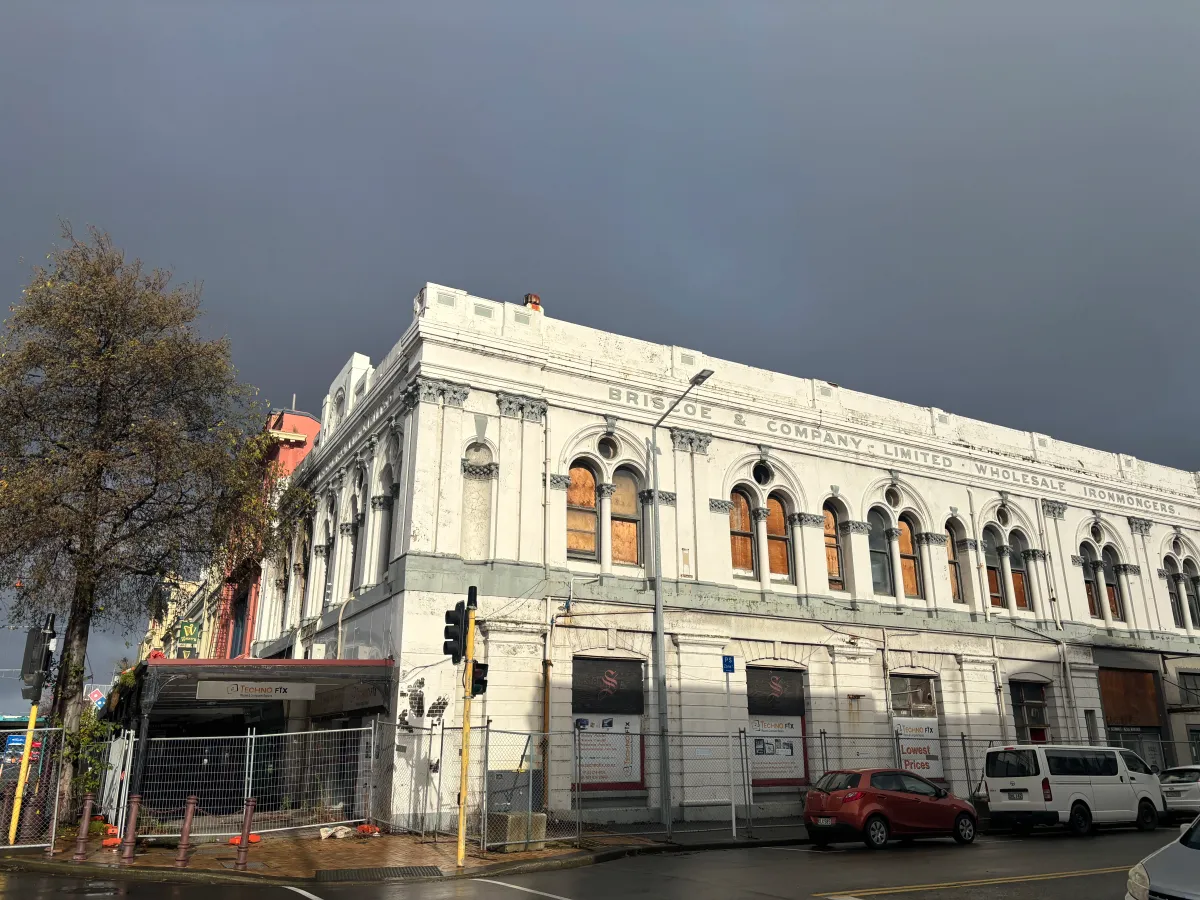
New risk-based approach aims to save over $8.2 billion in remediation and demolition costs
Thousands of buildings to be removed from earthquake-prone register under new assessment system
Small towns and low-risk areas like Auckland now exempt from many earthquake safety requirements
The Government has announced a major shake-up of the country’s earthquake-prone building system, introducing a risk-based approach that will remove thousands of buildings from the register and significantly reduce compliance costs for owners.
Building and Construction Minister Chris Penk said the current system, based on the New Building Standard (NBS), would be scrapped. It has been criticised for being too broad and inconsistent, with some buildings classed as earthquake-prone due to minor defects. “The NBS rates how an existing building is expected to perform in an earthquake compared to a new building and has proven too broad and inconsistent,” Penk said.
Under the new Earthquake-Prone Building (EPB) system, only structures that “pose a genuine risk to human life in medium and high seismic zones” will be included. These include concrete buildings three storeys or higher and unreinforced masonry buildings with unsecured façades and walls that face public areas or neighbouring properties.
Buildings under three storeys in towns with fewer than 10,000 people will no longer require remediation or display warning notices if their façades are secured. Auckland, Northland, and the Chatham Islands will be exempt from the earthquake-prone building regime altogether due to their low seismic risk. Coastal Otago, including Dunedin, will move from a low to medium risk classification.
Additional cost-saving changes include removing the requirement to upgrade fire safety and disability access at the same time as earthquake strengthening. Councils will be able to grant remediation extensions of up to 15 years, including for owners whose deadlines have already expired.
Penk said the system had discouraged essential seismic safety work by making it too expensive, particularly for owners of apartments and small businesses. “For many buildings, the price of strengthening runs from hundreds of thousands to several million dollars. As a result, these buildings are often left empty and become derelict,” he said.
The Government expects the new system to remove about 2,900 buildings from the earthquake-prone list. A further 1,440 buildings will face less costly strengthening requirements, while 880 will require no remediation at all. Only around 80 buildings will still need a full retrofit.
The changes come after a Ministry of Business, Innovation and Employment (MBIE) review and will be legislated through the Building (Earthquake-prone Building System Reform) Amendment Bill.
The ‘priority building’ classification will also be narrowed. Previously covering hospitals, schools and police stations, it will now apply only to buildings that could block emergency service routes or drop debris onto high-use roads and footpaths. This shift will ease deadlines and pressure on public infrastructure owners.
Mayors across the country have welcomed the announcement. Wellington’s mayor called it a “huge win”, estimating it could halve the number of earthquake-prone buildings in the city and save owners about $1 billion. Auckland’s mayor said the risk of an earthquake in his region was lower than that of a volcanic eruption and described previous rules as “stressful, expensive, and unnecessary”.
The Government says the new approach will help reinvigorate local economies and allow owners to invest in preserving community buildings that have been left empty due to unaffordable compliance costs.
Share this article
The link has been copied!
Your link has expired. Please request a new one.
Your link has expired. Please request a new one.
Your link has expired. Please request a new one.
Great! You've successfully signed up.
Great! You've successfully signed up.
Welcome back! You've successfully signed in.
Success! You now have access to additional content.