
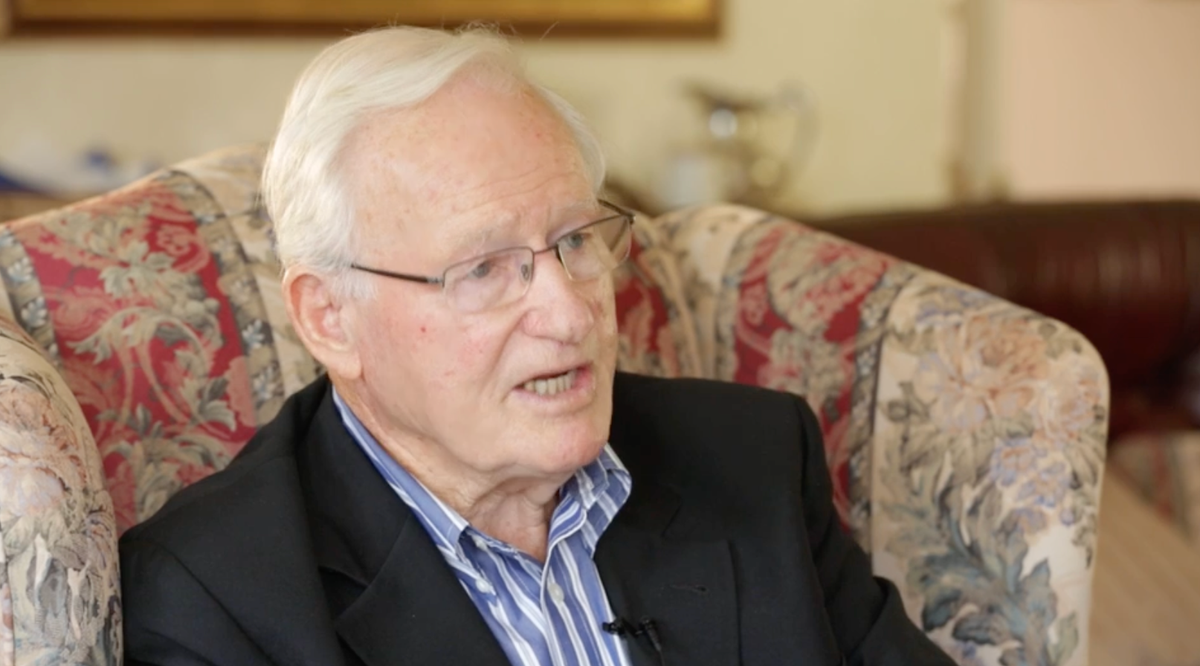

Former Prime Minister Jim Bolger has died aged 90, prompting an outpouring of tributes from past and present political figures. His family confirmed he died peacefully on Wednesday, surrounded by his wife Joan, their nine children, and 18 grandchildren.
Flags are being flown at half-mast today on government and public buildings in recognition of Bolger’s service.
Bolger was first elected to Parliament in 1972 and served as the MP for King Country for over two decades. He became Prime Minister in 1990, leading the country through a period of significant economic and political change until 1997.
Prime Minister Christopher Luxon acknowledged Bolger’s death with “deep sadness”, describing him as “a towering figure in New Zealand’s political life – a leader of conviction, a reformer of consequence, and a servant of the people whose legacy has shaped our nation in profound and lasting ways.”
Winston Peters, who worked closely with Bolger in leading New Zealand’s first MMP Government from 1996, said he steered the country through a difficult transition period.
Dame Jenny Shipley, who succeeded Bolger in 1997, told Breakfast she was “very sad” to hear of his passing, calling it “the end of an era”. She praised his bravery and negotiation skills, saying he “didn't just leave [to] deal with the easy things.”
Sir Geoffrey Palmer, New Zealand’s 33rd prime minister, also spoke on Breakfast, calling Bolger a “thoroughly decent human being” and noting his strong sense of social justice and Catholic values. He commended Bolger’s work on Māori issues and Treaty settlements.
Ruth Richardson, Bolger’s former finance minister, highlighted his “policy bravery”, while Sir Don McKinnon recalled his “good feel for the country” and political charm during tough times.
Former Prime Minister Helen Clark said she was saddened by the news, remembering Bolger as deeply committed to New Zealand.
Sir John Key, Prime Minister from 2008 to 2016, said Bolger “loved politics” and always seemed energised by his work. He recalled their discussions about race relations and said Bolger took “bold and brave steps” in honouring the Treaty.
Waikato-Tainui executive chairperson Tukoroirangi Morgan credited Bolger with modernising the Treaty settlement process, calling him “the ultimate connector” whose work would remain “unsurpassed”.
Former NZ First MP Tau Henare remembered Bolger’s joy during the formation of the first MMP coalition government.
Labour leader Chris Hipkins described Bolger as a “towering figure” whose leadership oversaw major change. He said Bolger’s legacy would shape New Zealand for generations to come.