
News
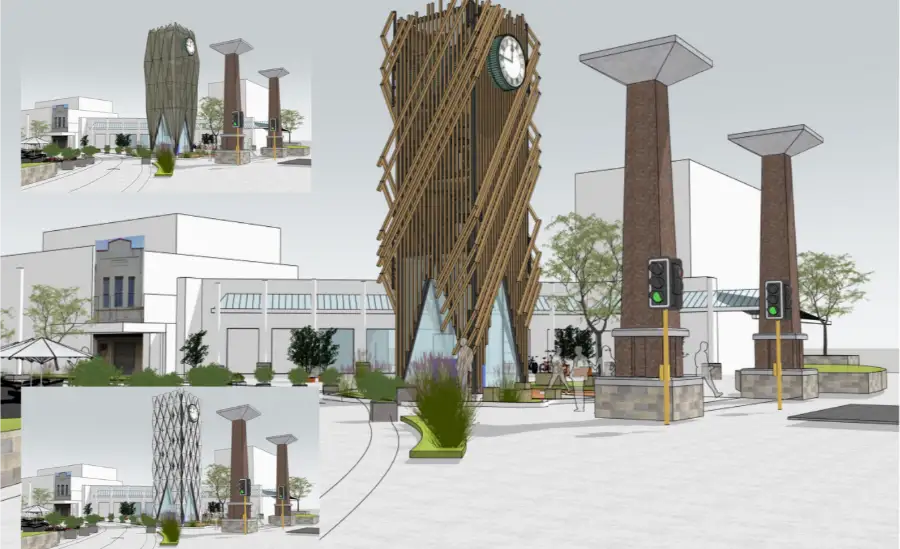
Invercargill City Council will decide next week between three design options for the new Esk Street West clock tower, with the preferred concept carrying a price tag of $1.37 million.
Councillors will meet on Tuesday to consider the revised budget request for the landmark structure, which forms part of the broader Esk Street West upgrade programme.
The council previously committed $4.024 million to the precinct through its 2024-2034 Long-Term Plan. After paying $2 million to the hotel developer for demolition of the old tower, new foundations, and streetscape works, just over $2 million remained for the clock itself. The original figure council had was $14million for the rejuvenation of Wachner but was drastically reduced between a deal with the developer and then Mayor Nobby Clark.
The top choice, designed by Beattie McDowell Architects, features aluminium fins and a curtain wall glass enclosure that would let the public view the clock mechanism from the street. This option costs around $1.37 million, down from an earlier estimate of $1.98 million after cost-saving adjustments.
Two cheaper alternatives are also on the table. Option 2 uses Glass Fibre Reinforced Concrete panels - a lightweight material common in rapid-build commercial projects - estimated at around $1.23 million. Option 3 features perforated aluminium sheet panels similar to those used on the original clock tower, costing approximately $1.22 million. Both alternatives would still include the 5-metre glass enclosure for the clock mechanism.
Several other materials were explored but rejected. Standard metal cladding was deemed unsuitable for the location, while Corten steel was dismissed due to the risk of it staining the newly laid paving around the site.
The clock mechanism has already been restored, but installation, connections to the bells and clock faces, and future-proofing of the timekeeping system still need completion once a cladding design is confirmed. A $300,000 allowance has been set aside for that work, with a further $200,000 contingency built into all three options.
Council staff are recommending the committee either endorse the aluminium sections concept design and approve the $1.37 million budget, or direct officers to investigate the alternative options further before returning with more detailed costs.
The Infrastructure and Growth Committee meets on Tuesday 14 April at 2pm in the Council Chamber at the Civic Theatre on Tay Street.
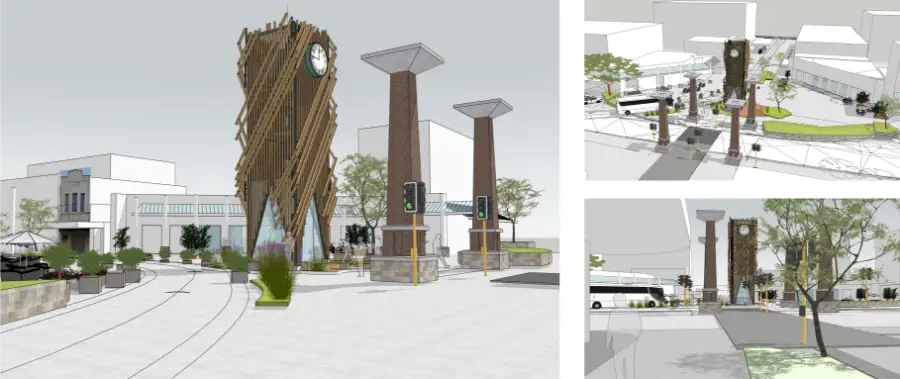
Revised Option 1 is the Concept Design which has previously been presented to Council which includes a base glass display box for the clock mechanism with coloured aluminium fins forming the shape of the clock structure. Includes a 5m high glass enclosure for the clock mechanism.
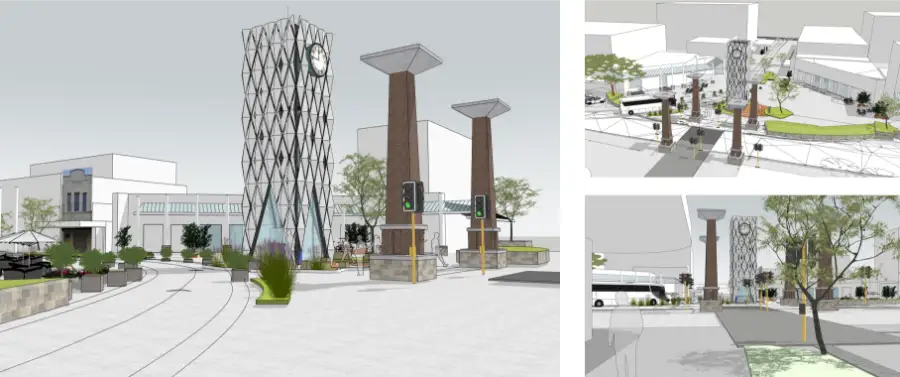
Option 2 includes Glass Fibre Reinforced Concrete (GFRC) panels being a lightweight, durable, and highly versatile cladding materials made from cement, aggregates, and alkaliresistant glass fibre. While the panels could be detailed and costs are similar this option is less desirable. They offer strength and design flexibility, enabling custom shapes, textures, and colours at 80% less weight than traditional concrete. They are often used on rapid-installation building envelopes. Includes a 5m high glass enclosure for the clock mechanism.
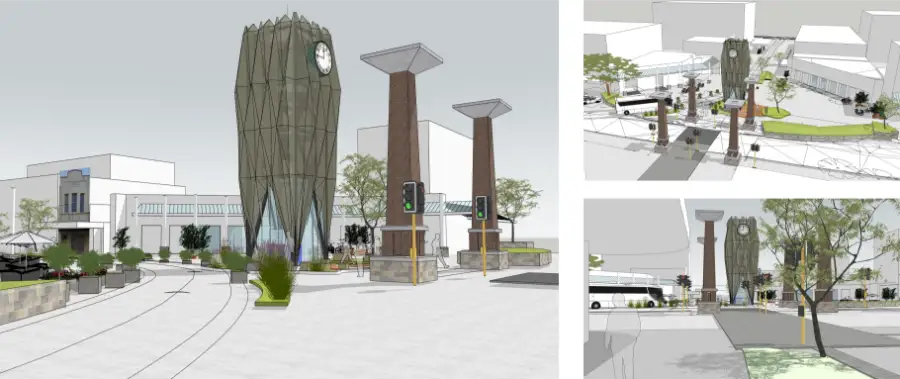
Option 3 includes a perforated aluminium sheet panel which could be customised to suit. The old clock structure used similar panels in some areas. Perforated sheets are versatile metal panels (aluminium, steel, or stainless steel) featuring punched, custom hole patterns (round, square, slotted) used for architectural screening, fencing, and safety guarding. Includes a 5m high glass enclosure for the clock mechanism