
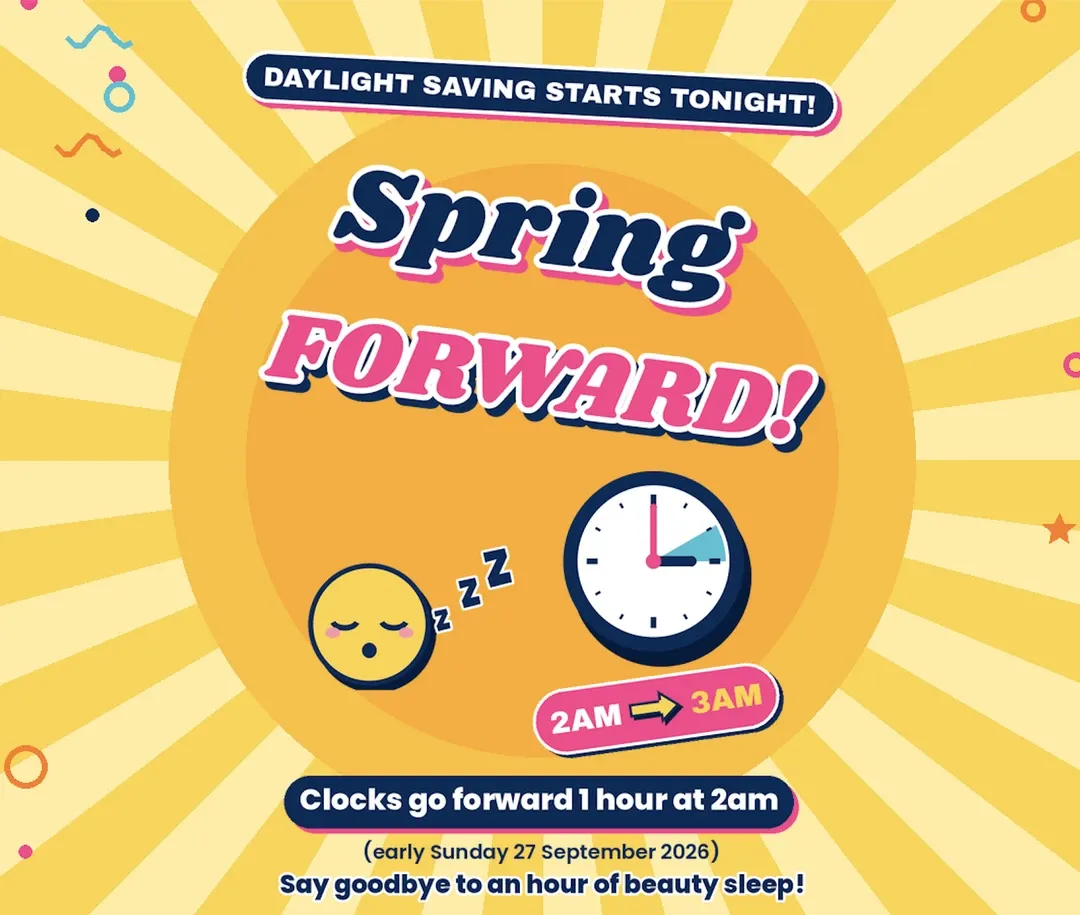
Invercargill loses an hour of sleep tonight. Clocks spring forward at 2am Sunday, September 27, jumping straight to 3am — and no, you don't get it back until April 4.
Daylight saving has been New Zealand's twice-yearly ritual since 1927, when entomologist George Hudson lobbied to shift clocks forward for more usable evening light. It was scrapped, then revived in the 1970s during the global energy crisis, and the current September-to-April schedule has been running since 2007. Twenty-seven weeks of longer evenings, then back to dark afternoons. The annual trade-off.
Most phones and computers will update themselves overnight — worth a quick check of your settings to be sure. Android users should head to Settings, System, Date and Time, and confirm Set Automatically is switched on. iPhone users go to Settings, General, Date and Time, same toggle. Watches, microwaves, car dashboards, oven clocks: all manual. All annoying. The usual.
There is, however, something more urgent attached to this clock change than whether your kitchen timer is an hour out.
Fire and Emergency NZ is using the occasion to push smoke alarm checks — particularly for older relatives, friends and neighbours. The numbers behind the message are blunt. Community education manager Tom Ronaldson said every second person who dies in a fire is aged over 60, and that figure has been climbing over the past five years.
"People only have around three minutes to get out before a house fire becomes unsurvivable," Ronaldson said. "To give yourself and your older family and friends the earliest possible warning, you need working smoke alarms installed in every bedroom, hallway and living area."
Working being the key word. Ronaldson said many homes have alarms installed but well past their useful life — smoke alarms should be replaced after 10 years. Checking is straightforward: pull the alarm off its base plate and look at the manufacture or expiry date on the bottom.
"We often see homes which have smoke alarms installed but they are well past their use by date so won't be at their best," he said.
Fire and Emergency recommends long-life photoelectric alarms in every bedroom, living room and hallway. The clock change is also a prompt to confirm your household has two clear escape routes and an agreed meeting place outside.
Daylight saving runs until Sunday April 4, when clocks go back an hour at 3am — and, unlike this morning, you wake up with an extra hour rather than a deficit.